Everyone has heard the story. The runner who was flying at 25 km, and then at 32 km the legs turn to concrete, the pace drops off a cliff and the finish line feels a different country away. That is the wall.
It sounds like bad luck. It is more often the result of choices made hours earlier, most of them in the first half of the race and the weeks of training before it. This article explains what is going on and what you can do about it.
What is hitting the wall?
It is a sudden, strong drop in energy and pace late in a long effort, usually somewhere past 30 km in a marathon. Runners describe heavy legs, a foggy head, a sudden urge to stop, and a pace that was steady and is now a shuffle.
It is not a sign you are not a runner. Even strong runners hit it when pacing or fuelling goes wrong. It is especially common in a first marathon, when you have not yet learned where your limits are.
Why does it happen?
Several things stack up, and they usually come together:
- Starting too fast. The effort you spend early costs you later. A hard first half leaves a long, difficult second half.
- Running low on fuel. Your body stores a limited amount of the energy it uses at faster paces. Long efforts use it up. If you do not top it up as you go, there is less in reserve for the finish.
- Being under-trained for the distance. If your long runs stopped well short of the race, your legs meet unfamiliar fatigue for the first time on race day.
- Heat and dehydration. Hot weather raises the cost of every kilometre.
None of these are mysterious, and most can be improved.
How do I avoid it with pacing?
Start slower than you want. It is the single most useful step, and it is covered in full in how to pace a marathon. A pace that feels almost too easy for the first 10 km protects you for the last 10.
Also run by effort on climbs rather than holding the same pace, which matters a lot in a city like Amman. Our hills guide shows how.
How does fuelling practice help?
Fuelling on a long run is a skill, and you get better at it by practising. The aim is simple: find out what you can eat and drink while running, what sits well in your stomach, and when you like to take it.
Common practice, not a prescription:
- Eat a normal, familiar meal rich in carbohydrates before your long runs.
- On long runs, try the drinks, gels or snacks you plan to use in the race.
- Take fuel early and regularly, instead of waiting until you feel hungry or flat.
- Learn what the race itself will provide, and train with the same products if you can.
- Nothing new on race day. If a food has not worked on a long run, do not trust it on race day.
For more detail, see our guide to fuelling long runs and the note on hydration and electrolytes. If you have a health condition or dietary needs, talk to a doctor or a dietitian before changing how you eat.
How should I train so the long run does not break me?
Your long runs are the practice. Build them slowly, as we describe in build slowly, and rehearse the full routine on them: pre-run meal, kit, pace, drinks, fuel. A long run that feels hard in training is a good place to learn what to adjust.
Do a few long runs where the last part is a bit faster than the start, so your body learns what a finish with tired legs feels like. Our marathon training plan shows how long runs fit across the weeks.
What if I feel it coming on during the race?
Stay calm. A bad patch is not always the wall, and many runners recover from one. Try this:
- Slow down for a few minutes. A small drop now can save a large one later.
- Take your drink and fuel if you have not recently.
- Shorten your stride and relax your shoulders and hands.
- Break the distance into small pieces: the next lamp post, the next aid station.
- Walk a short stretch if you need to, then start again. This is a legitimate tactic, not a failure.
If you feel dizzy, faint, or have chest pain, stop and ask for help. No time is worth it. When in doubt, see a doctor.
How does the club help?
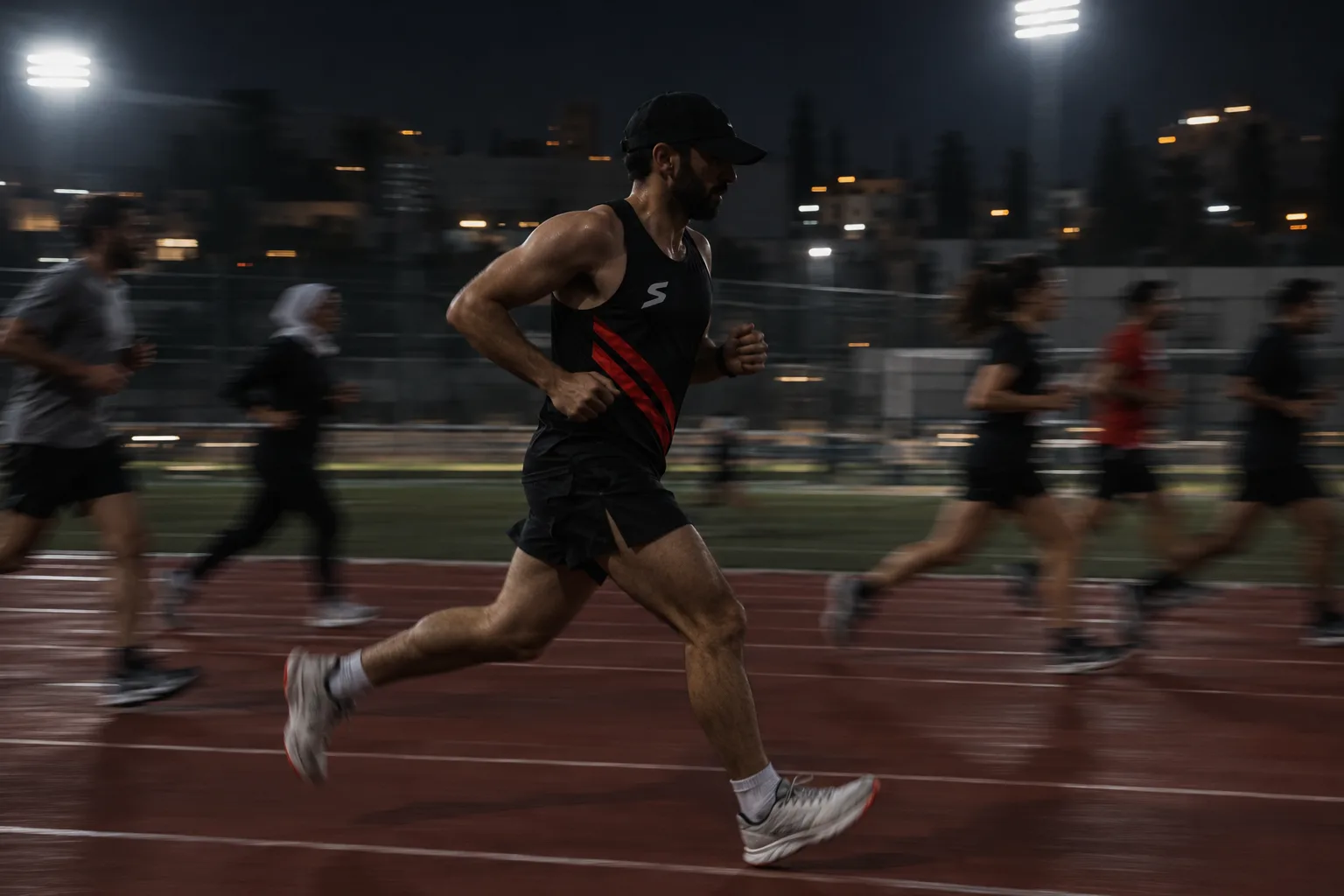
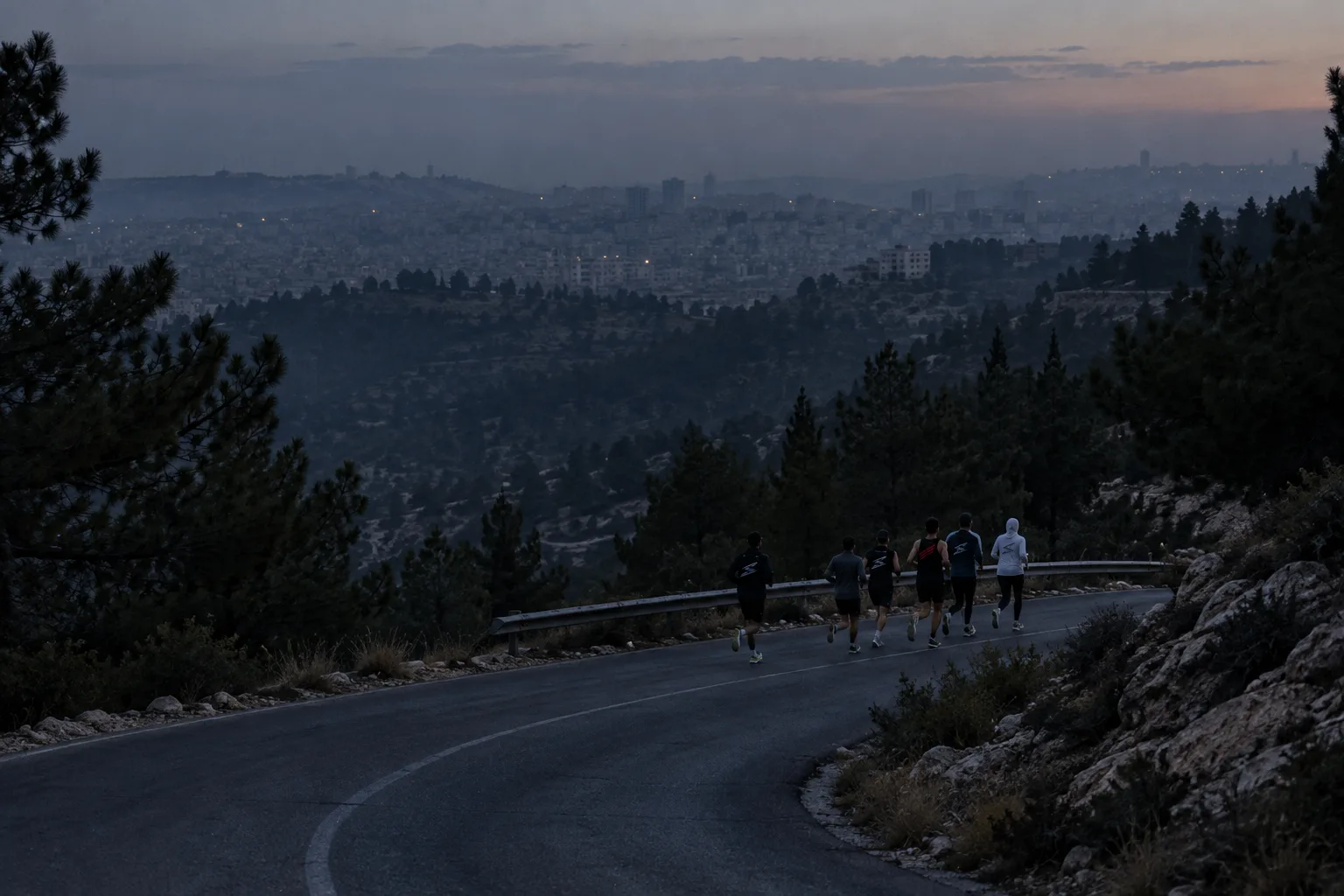
The Saturday 6:30 am long run is 14 to 25 km on the Dabouq hills, and it is the best place to practise fuelling, pacing and pushing on tired legs, with a group to keep you company. Amman is hilly, so it also teaches you to read effort. The Wednesday 6:30 pm track session builds the speed and control you need so that your marathon pace feels comfortable, coached in pace groups at Al Hussein Sports City. On Mondays at 6:30 pm the Open Run is easy and open to everyone: download the app and check in.
In summer, the heat makes everything harder. Practise earlier in the day and read our summer heat guide.
The bottom line
The wall is rarely random. It is usually a combination of a fast start, low fuel and a long distance your legs were not ready for. Pace the first half carefully, practise your fuelling on long runs, train the distance, and keep your plan simple.
Do that and the wall becomes something you hear stories about, not something you meet.
General advice, not medical advice. If pain persists, see a doctor or physiotherapist.