Many runners have one speed. They head out, run at a pace that feels “decent”, and come home tired every time. It works for a while, and then the progress stops. The runs are not bad, they are just all the same.
The fix is not to run more. It is to make each run clearly what it is meant to be. This article gives you one effort scale for your whole week, and shows how our sessions fit on it.
Why does effort matter more than pace?
Because pace changes with everything around you. The same pace that feels easy on a cool November evening can feel hard in July, or on a climb in Amman. If you chase a number, you will often run too hard without noticing.
Effort is how hard the run feels to your body, today. It already includes the heat, the hill, your sleep and your week at work. Learn to read it, and pace becomes a result rather than a target.
What is the 1 to 10 scale?
It is a simple way to rate how hard you are working. Coaches call it RPE, short for “rate of perceived exertion”, but you only need the numbers:
- 1 to 2: very easy. Walking, or the gentlest jog. You could chat all day.
- 3 to 4: easy. You can speak in full sentences. Most of your running lives here.
- 5 to 6: steady. Breathing is deeper. You can talk, but in shorter sentences.
- 7 to 8: hard. A few words at a time. Tempo efforts and hill reps sit here.
- 9: very hard. Short intervals. Talking is not on the menu.
- 10: everything. A sprint finish. You rarely need it in training.
Pair it with the talk test. If you can talk easily, it is easy. If you can only say a few words, it is hard. Our start easy guide covers the talk test in more detail.
How hard should an easy run feel?
Easier than you think. A 3 or 4 out of 10. You should finish feeling you could go again, not that you survived.
This is where most runners go wrong. They run easy days at a 5 or 6 because it feels more productive, and then they arrive at the hard session already tired. Easy days are not wasted days. They build your base and let the hard work sink in. If you need to walk on a hill to keep it easy, walk.
How hard should a hard session feel?
Hard, but controlled. A 7 to 9, depending on the session.
- Tempo efforts: around 7. “Comfortably hard”: you are working, but you are in charge of the pace. See tempo runs.
- Hill reps: around 7 to 8 on the way up, easy on the way down. See hills.
- Intervals: 8 to 9 for each rep, with easy recovery between. See intervals explained.
The test of a good hard session is not how wrecked you feel. It is whether your last rep matched your first. If you faded, the effort was too high at the start.
Where does the long run sit?
Mostly easy, a 3 to 5. The long run’s job is time on your feet, not speed. Going out too fast is the classic way to turn it into a slog.
Some weeks, when you are training for a race, the coach may ask for the last part at a steadier effort, around 6. That is the exception, and it only works if the first part stayed easy. Our long run guide covers what to bring.
What could a week look like?
Here is one example. Treat it as an illustration, not a prescription.
For someone running three times a week:
- One easy run: 3 to 4 out of 10.
- One harder session: 7 to 9 out of 10.
- One longer run: mostly 3 to 5 out of 10.
For someone training for a half marathon, four or five runs a week:
- Two or three easy runs: 3 to 4 out of 10.
- One harder session: 7 to 9 out of 10.
- One long run: mostly 3 to 5, sometimes with a steadier finish.
Notice the pattern: in both weeks, most of the running is easy, and there is only one truly hard day. If you are not sure how many runs suit you, read how often to run.
How does the club do it?
Our week is built on this exact scale.
- Monday Open Run, 6:30 pm, Al Hussein Sports City track: easy, a 3 to 4. Open to everyone; download the app and check in. See the Monday page.
- Wednesday track, 6:30 pm, members: the hard day, 7 to 9, in pace groups with the coach calling the reps through the app. See the Wednesday page.
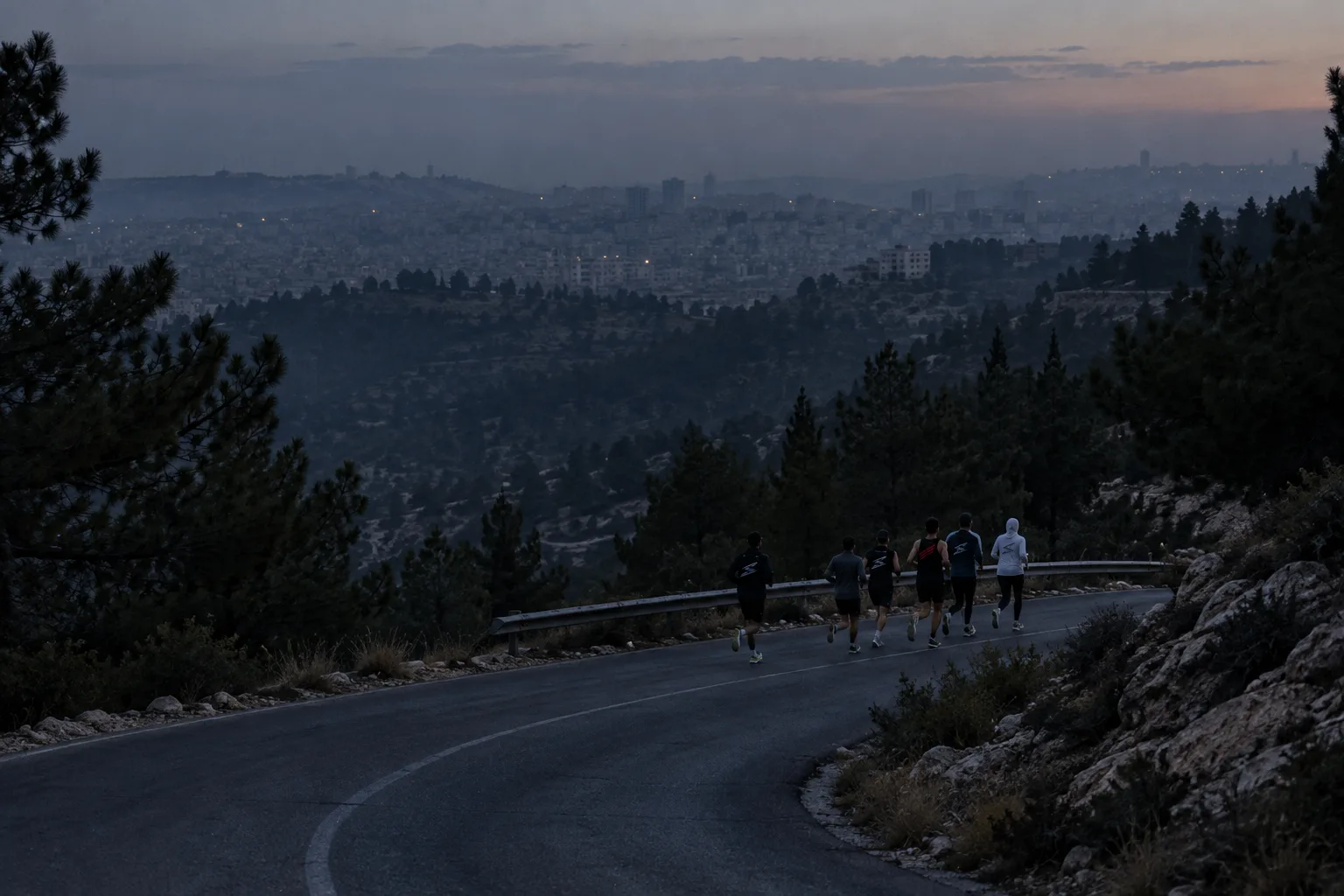
- Saturday long run, 6:30 am, Dabouq hills, members: mostly easy, 3 to 5. The hills will push your effort up without your pace changing, so let the climbs be slower. See the Saturday page.
If you only come to one, make it Monday, and keep it genuinely easy.
Do heat and hills change the numbers?
They change the pace, not the effort. On a hot evening or a long climb, the same 4 out of 10 will be slower. That is correct. Hold the effort and let the pace drop.
In an Amman summer, this matters a lot. Running “your normal pace” in the heat can turn an easy run into a hard one. Our summer heat guide and hills guide go into it.
What mistakes should I avoid?
- Running every run at a 5 or 6, “just a bit hard”.
- Treating the easy run as a race against your watch.
- Going all out on the first rep of a hard session.
- Starting the long run at the pace you want to finish at.
- Chasing your cool-weather pace in July.
- Adding a second hard day before the first one feels good.
The bottom line
Every run in your week has a job. Keep easy runs at a 3 or 4, make one session hard and controlled, and run the long run mostly easy. Judge it by how it feels and by the talk test, not by the pace on your watch, especially in heat and on hills.
Start this week: come to Monday’s Open Run and run it slowly enough to chat the whole way. That is what easy feels like.
General advice, not medical advice. If pain persists, see a doctor or physiotherapist.