For a while, every run seemed to bring progress. Your pace dropped, your distance grew and you felt strong. Then something stopped. The same routes, the same effort, the same pace, week after week. It can be discouraging, and it makes many runners push harder, which is usually the wrong response.
A plateau is not a failure. It is information. This article walks through the most common reasons, and what to change.
Is a plateau normal?
Yes. Early progress comes quickly because everything is new to your body. After a while the gains slow down, and nothing is wrong with that. Progress often comes in steps, with flat stretches in between where your body is consolidating.
Flat weeks can also be life, not running. Poor sleep, stress, a long work season or a hot summer all take a toll on what you can do. Before blaming your training, check the rest of your week.
Are my easy runs too fast?
This is the number one cause. Many runners run most of their runs at a medium effort: not easy enough to recover, not hard enough to improve. Everything sits in a grey zone, and the body never gets a full rest or a full push.
Try slowing your easy runs down until you can speak in full sentences, with the talk test from our start-easy guide. It will feel too slow at first. That is the point. Easy runs give you the energy to make your harder ones count.
Am I doing the same thing every week?
Your body adapts to whatever you give it. If you run the same distance at the same effort on the same route, it gets used to it and stops improving. A good week has a mix:
- Easy runs for volume and recovery.
- One run with a hard but controlled effort, such as intervals or a tempo run.
- One longer run at a comfortable pace.
If you already do this, try changing one part gently. Make the long run a little longer, or the interval session slightly more structured. Small changes are enough.
Am I resting enough?
You get fitter while you recover, not while you train. If your legs are tired all the time, your sleep is short or your easy runs have started to feel hard, a lack of rest may be what is holding you back. A lighter week, an extra rest day or an earlier bedtime can do more than another session. Our rest and sleep guide has practical ideas.
If you feel unusually run down, or something hurts and does not settle, see a doctor or physio rather than training through it.
Is strength missing from my week?
Often, yes. Running only builds a narrow set of muscles. A short strength routine once or twice a week can make your legs more resilient and your stride steadier. It does not need a gym. Simple bodyweight work is a good start, and our strength for runners guide shows a sensible way in.
How do I know if it is the plan or just a bad patch?
Give it a fair window. A single flat run, or a flat week, tells you very little. Look at a month. If your easy pace is the same, the effort feels the same and nothing hurts, that is a plateau worth working on. If you are tired, sleeping badly or under stress, the answer is more likely recovery than training.
Compare like with like. The same route, similar weather and similar time of day make a pace comparison meaningful. In Amman, summer heat and hills can easily hide progress, so judge effort as well as the watch.
How can the club help?
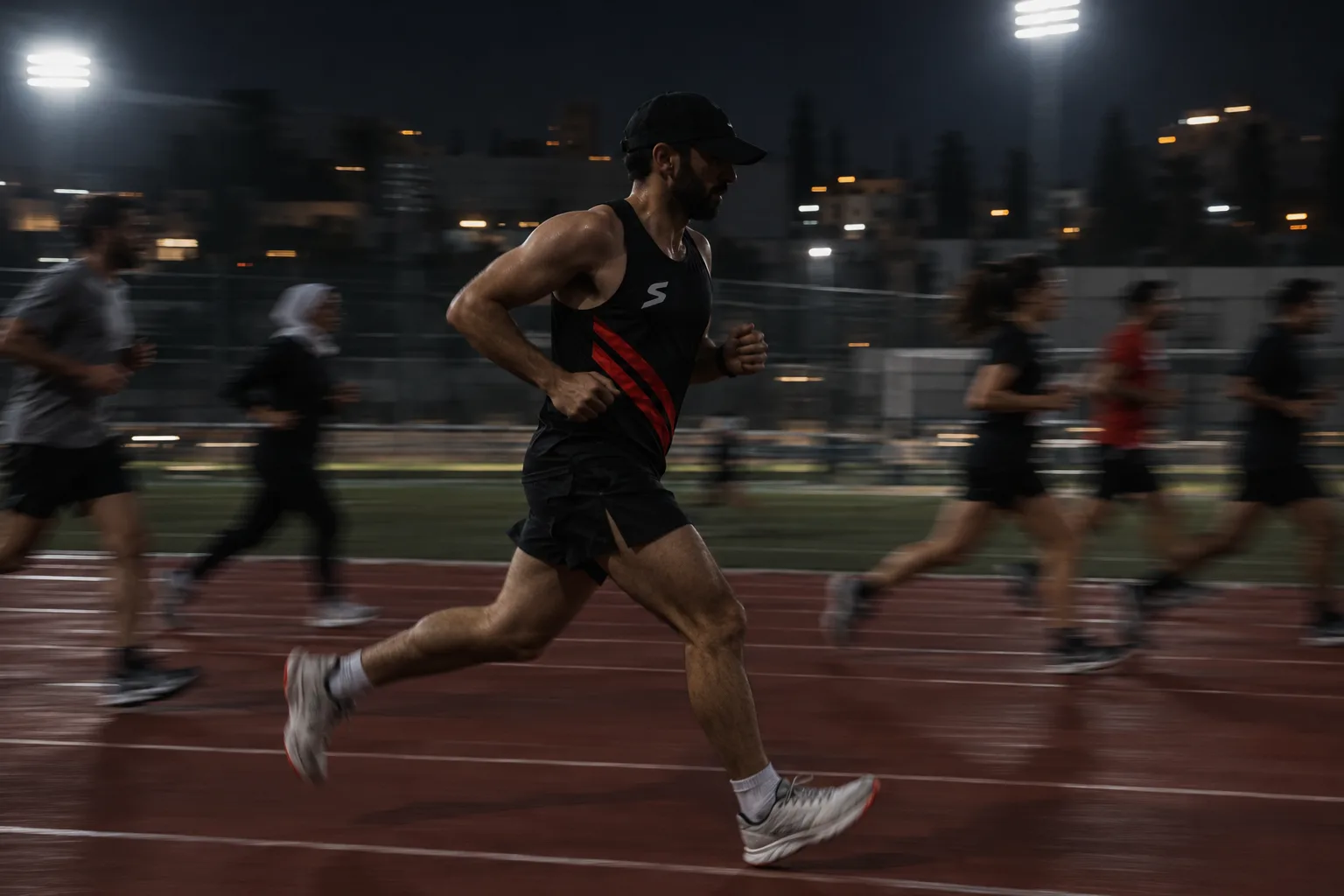
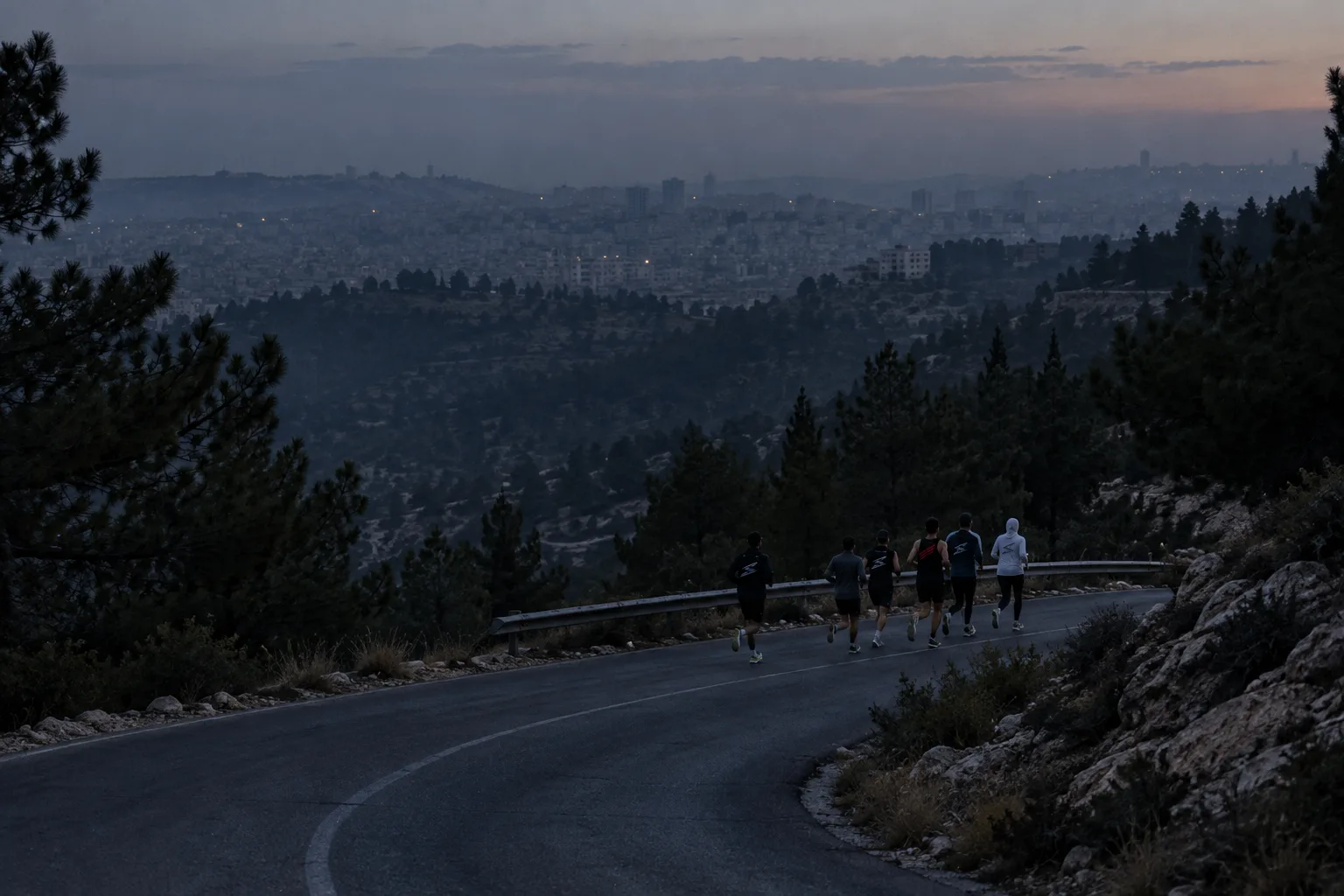
Structure is often what breaks a plateau, and the club week provides it. The Wednesday 6:30 pm track session is coached intervals at Al Hussein Sports City in pace groups, which gives you a hard effort with someone else setting the plan. The Saturday 6:30 am long run covers 14 to 25 km on the Dabouq hills, which builds strength and patience. And Monday’s Open Run is the easy, social start to the week.
You can also use the pace calculator to find paces that match your current fitness, instead of the pace you hope for.
Should I just run harder?
Usually not. Pushing every run harder tends to make you tired without making you faster. The better move is to protect your hard days and make your easy days properly easy, so the hard days can be genuinely hard.
It also helps to set a goal beyond pace. A new distance, a first group run, or a race on the calendar can give your training a direction when the watch stops moving. Our race day checklist is a good companion once you pick one.
What about shoes and fuel?
Two small things are worth a quick check. Shoes that are worn out can make every run feel flatter, so see shoes and kit if yours are old. And if you run long or in the heat, arriving under-fuelled or under-hydrated can quietly cost you pace, so read hydration and electrolytes too.
The bottom line
When your pace stops improving, slow your easy runs, add variety, protect your rest and be patient. Change one thing at a time and give it several weeks. Most plateaus are not a wall, just a sign that the next step needs a different kind of work.
If you want a clearer structure to follow, take our quiz to find the plan that matches your goal.
General advice, not medical advice. If pain persists, see a doctor or physiotherapist.