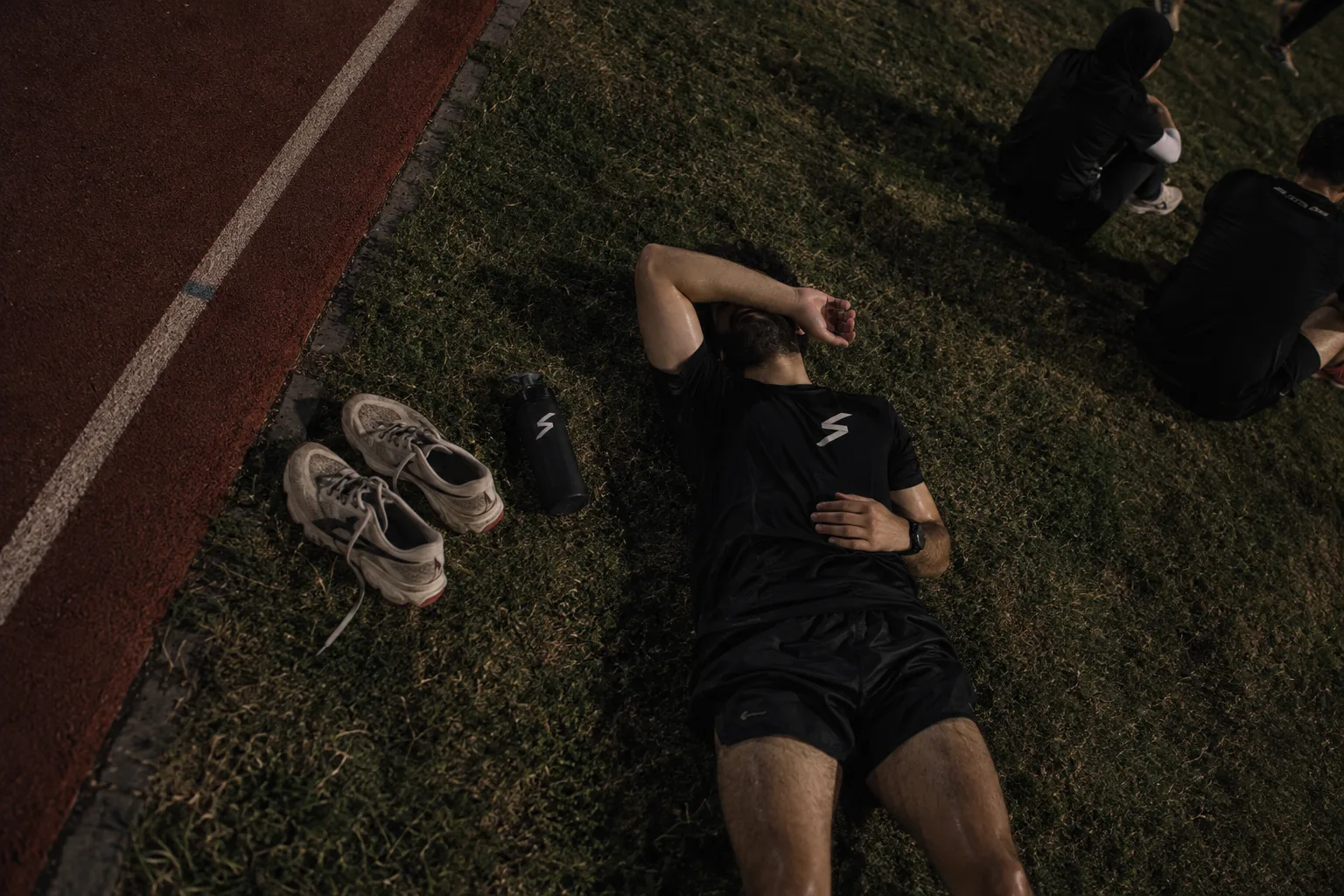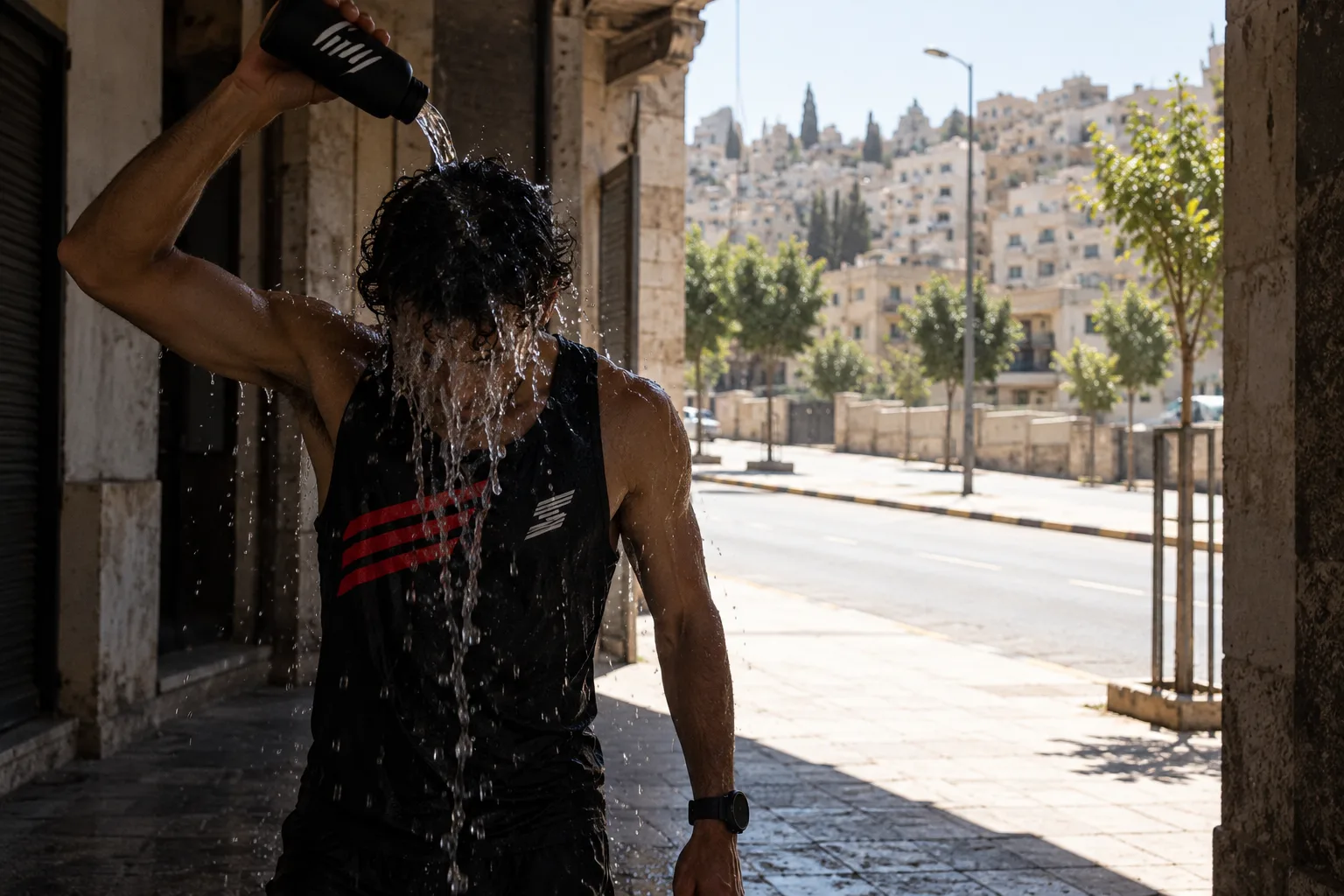
Amman summers are dry and hot, and a run that felt easy in March can feel brutal in July at the same pace. Much of that is your body working to stay cool, and that work costs you water and salt.
The good news is that hydration does not need to be complicated. This article gives common, practical guidance for runners. It is not medical advice, and anyone with a health condition should check with a doctor first.
How much should I drink before a run?
Start the day well hydrated rather than trying to catch up in the last ten minutes. Drink normally through the day, have a glass of water with your pre-run meal, and sip a little more in the hour before you go if you are thirsty.
A simple check is the colour of your urine. Pale straw colour is usually a good sign. Dark yellow is a hint to drink more. Do not chug a litre right before a run, as it will slosh around and send you looking for a bathroom.
Should I drink during a run?
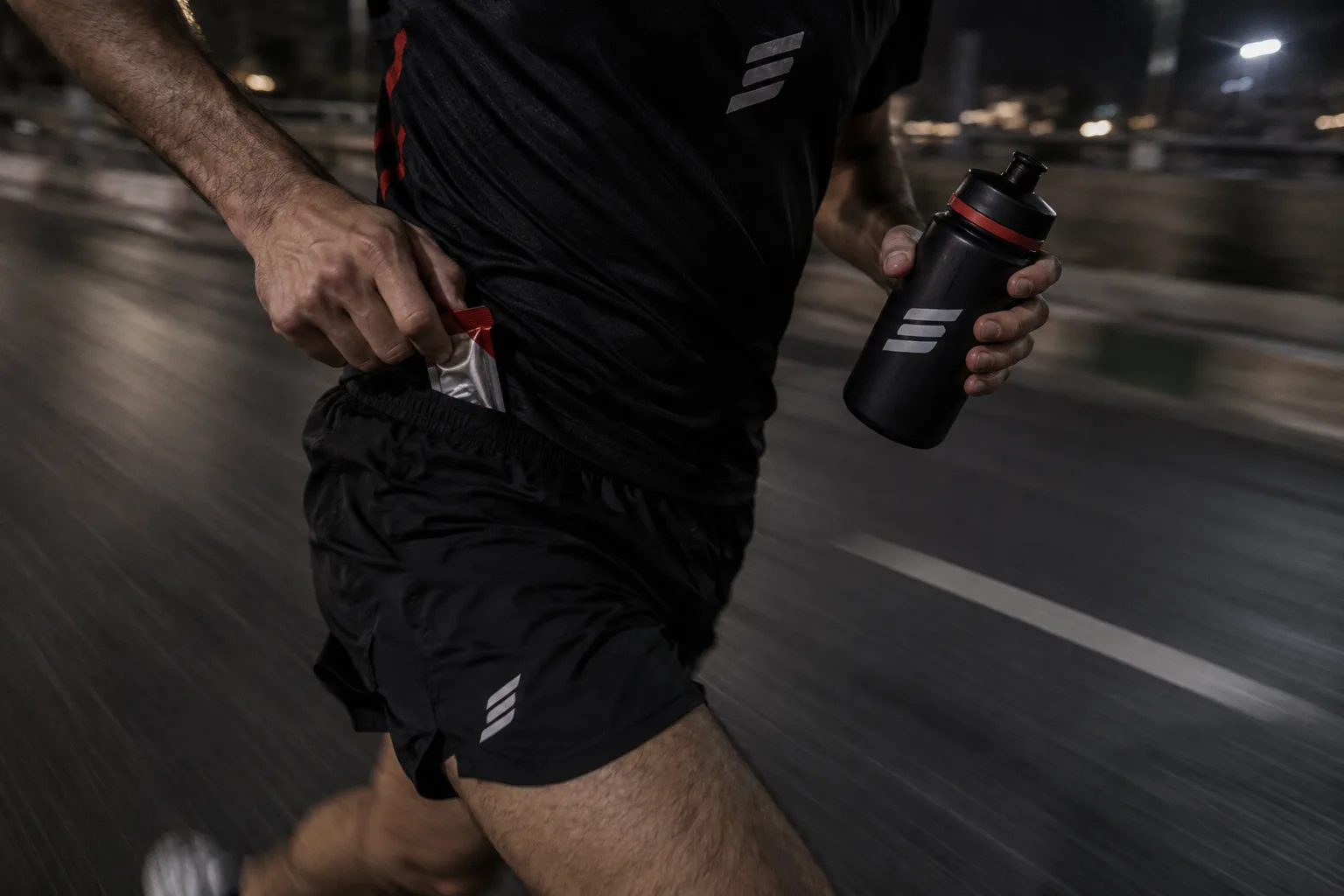
For a short easy run in cool weather, you often do not need anything. Once runs get longer or hotter, taking water along makes sense. Most runners do well drinking when they feel thirsty, in small sips, rather than following a strict schedule.
Both extremes cause trouble. Running without any drink on a long hot day is a risk, and so is forcing down far more than you need. Drinking too much plain water over many hours can dilute the salt in your body, which is a real concern on very long efforts. Thirst is a reasonable guide for most people on most runs.
Why does salt matter as well as water?
When you sweat, you lose water and also salts, which are often called electrolytes. They help your muscles and nerves do their job. On a short run the loss is small. On a long run in the heat it adds up, and you may see white, gritty marks on your cap or shirt once the sweat dries.
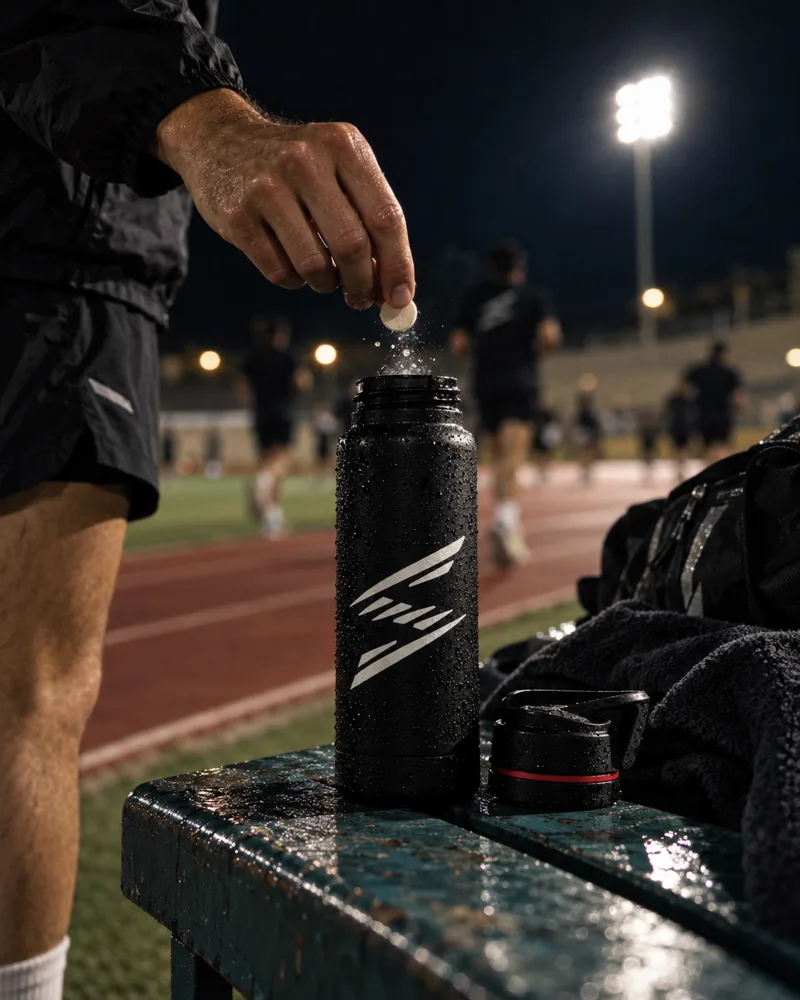
That is why a salty snack, or a drink that contains electrolytes, can be helpful on long hot runs. Many runners use an electrolyte tablet or powder in their water, or simply eat something salty, such as a plain cracker, a bit of bread with a pinch of salt, or salted nuts. This is common practice and worth trying in training, but it is not a cure for everything, and the right amount varies a lot from person to person.
What are the warning signs I should know?
Know what your body is telling you, and take it seriously.
Signs you may be short of fluid or overheating:
- Very dark urine, or hardly any.
- A pounding headache, dizziness or feeling faint.
- Stopping sweating on a hot day, or feeling chilled and goose-pimpled in the heat.
- Nausea, confusion or unusual weakness.
If you notice these, stop running, get into the shade, cool down slowly with water and rest, and do not push on. If symptoms are strong or do not ease, get medical help. Heat illness is serious, and a doctor is the right person to ask, not a running article.
How do I plan for hot weather runs in Amman?
Plan the day around the heat, not the other way round.
- Run early or late. On summer days, a 6:30 am start is much kinder than midday.
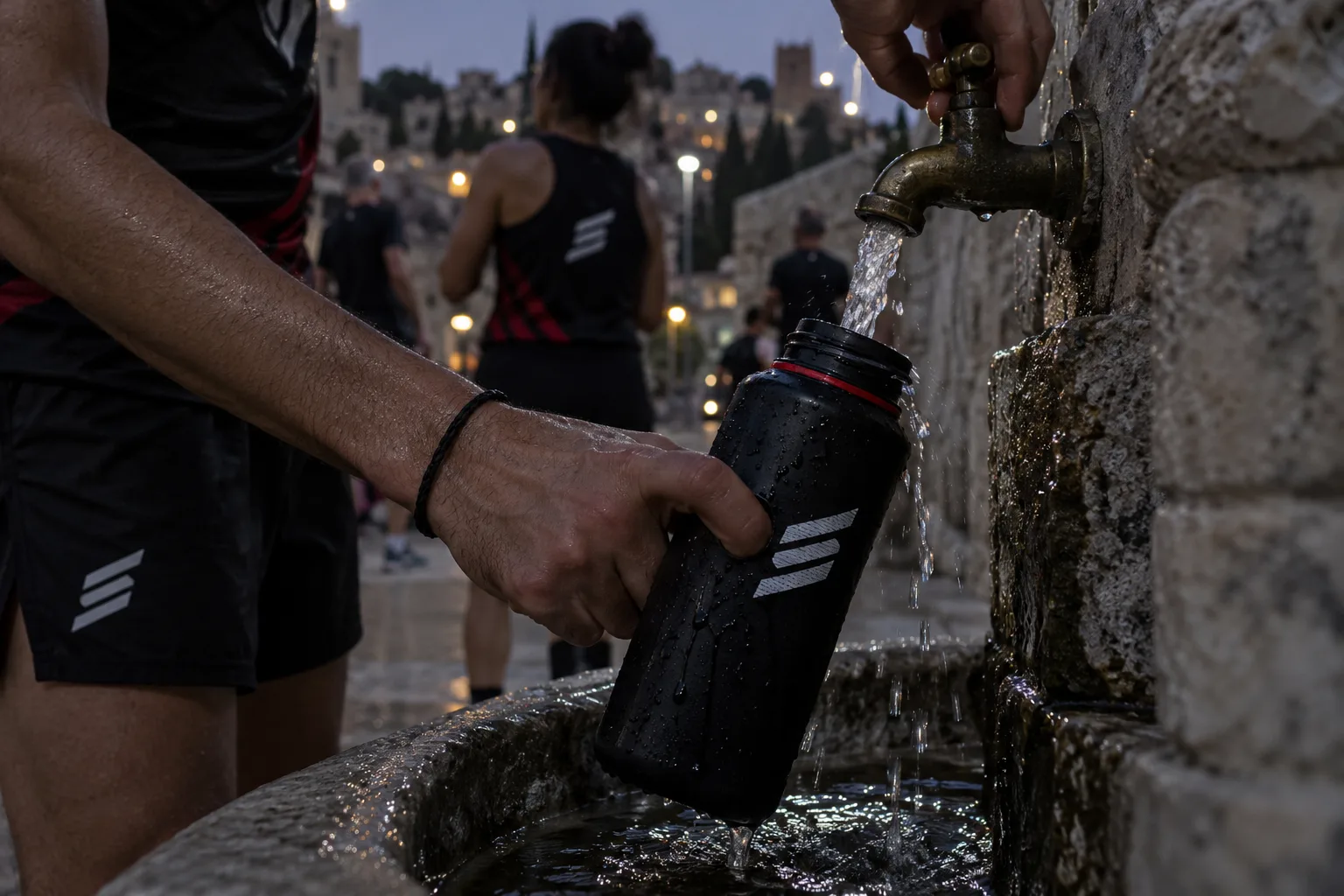
- Carry water or plan a route that passes a shop or a fountain you trust.
- Wear light, breathable clothes and a cap.
- Slow down. The same pace costs more in heat, so run by effort. Our summer heat guide goes deeper on this.
- Rinse and replace after the run too, with water and a normal meal.
Do not forget that hydration builds over days. If you have a long run on Saturday, drinking well on Thursday and Friday matters.
How do I practise hydration in training?
Treat it like fuelling: test in training, never on race day. Try one change at a time, such as adding an electrolyte drink to one long run, and note how you feel. Weigh up how much you carried against how long you were out, and how you felt in the last hour.
Pair this with your food plan from fuelling long runs, because eating and drinking work together, and with the race day checklist so nothing is new on the day.
How does this fit the club?
The Saturday long run at 6:30 am covers 14 to 25 km on the Dabouq hills, and in summer that adds up to a lot of sweating. Bring your own water and think about what you will carry before you set out. The Wednesday track session at 6:30 pm at Al Hussein Sports City is easier to manage, since you can leave a bottle by the track. The Monday Open Run is easy and open to everyone, a good place to practise carrying a bottle.
If you are new to this, our first group run guide covers what to bring to your first session.
The bottom line
Start hydrated, sip when you are thirsty, and replace some salt on long hot runs. Know the warning signs, and stop if you feel unwell. Treat hydration as something to practise, just like pace or fuelling.
Everyone sweats differently, so use this as a starting point and let your own training teach you the rest. If something feels off during or after a run, see a doctor or physio.
General advice, not medical advice. If pain persists, see a doctor or physiotherapist.