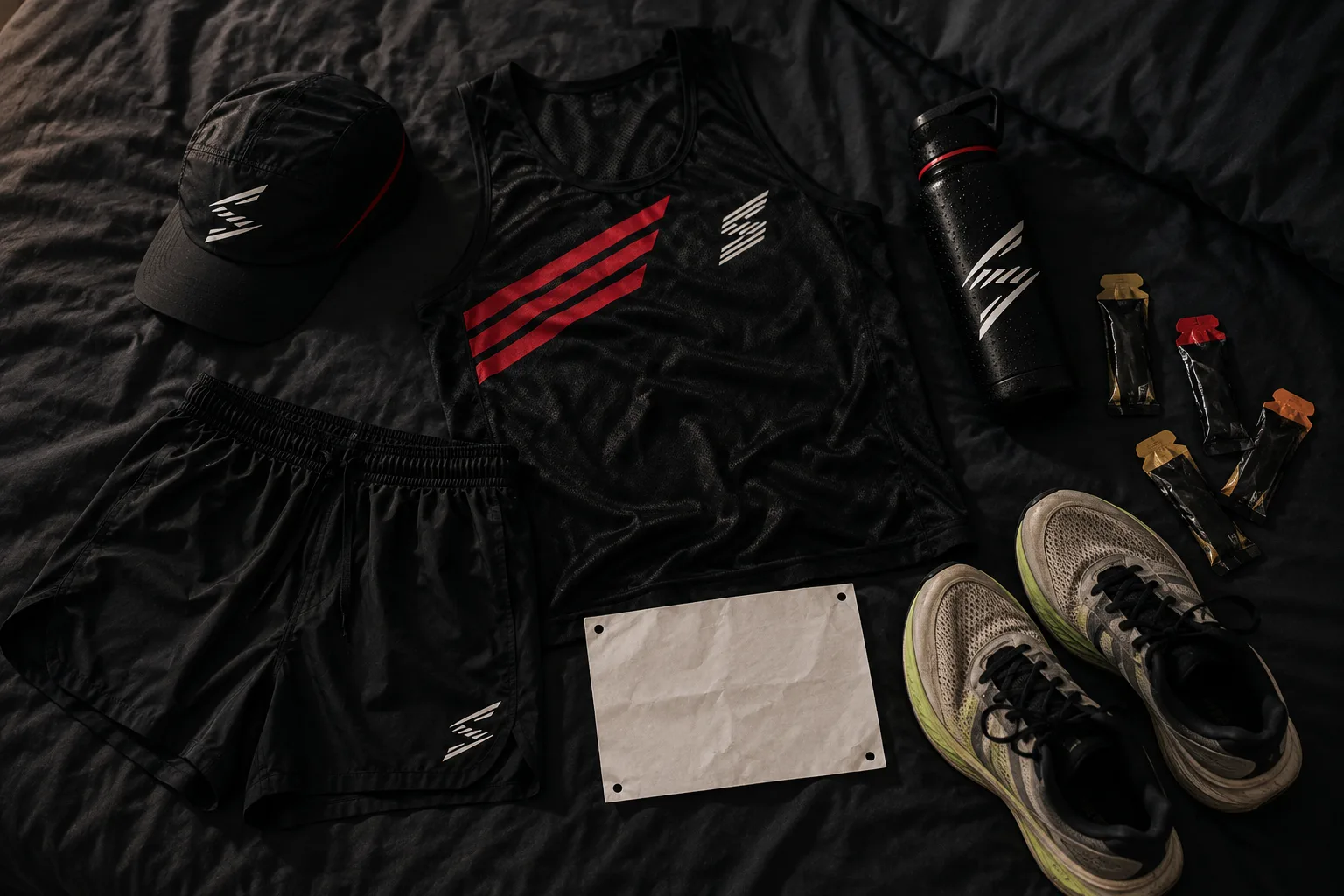
Racing is the easy part once the logistics are done. Most race-day stress is not about fitness. It is a missing safety pin, a flat watch battery or a rushed breakfast. A short checklist takes most of that away.
This guide works for any distance from 10K to marathon, with notes where they differ. If it is your first half, read training for your first half marathon alongside it.
What should I do in the week before?
The golden rule is nothing new. No new shoes, no new kit, no new food, no surprise hard session.
- Keep runs short and easy. You will not gain fitness now, but you can lose freshness.
- Sleep well. Even if the night before goes badly, a good week of sleep helps (rest and sleep).
- Eat and drink as normal.
- Check the weather and your route to the start.
What do I do the night before?
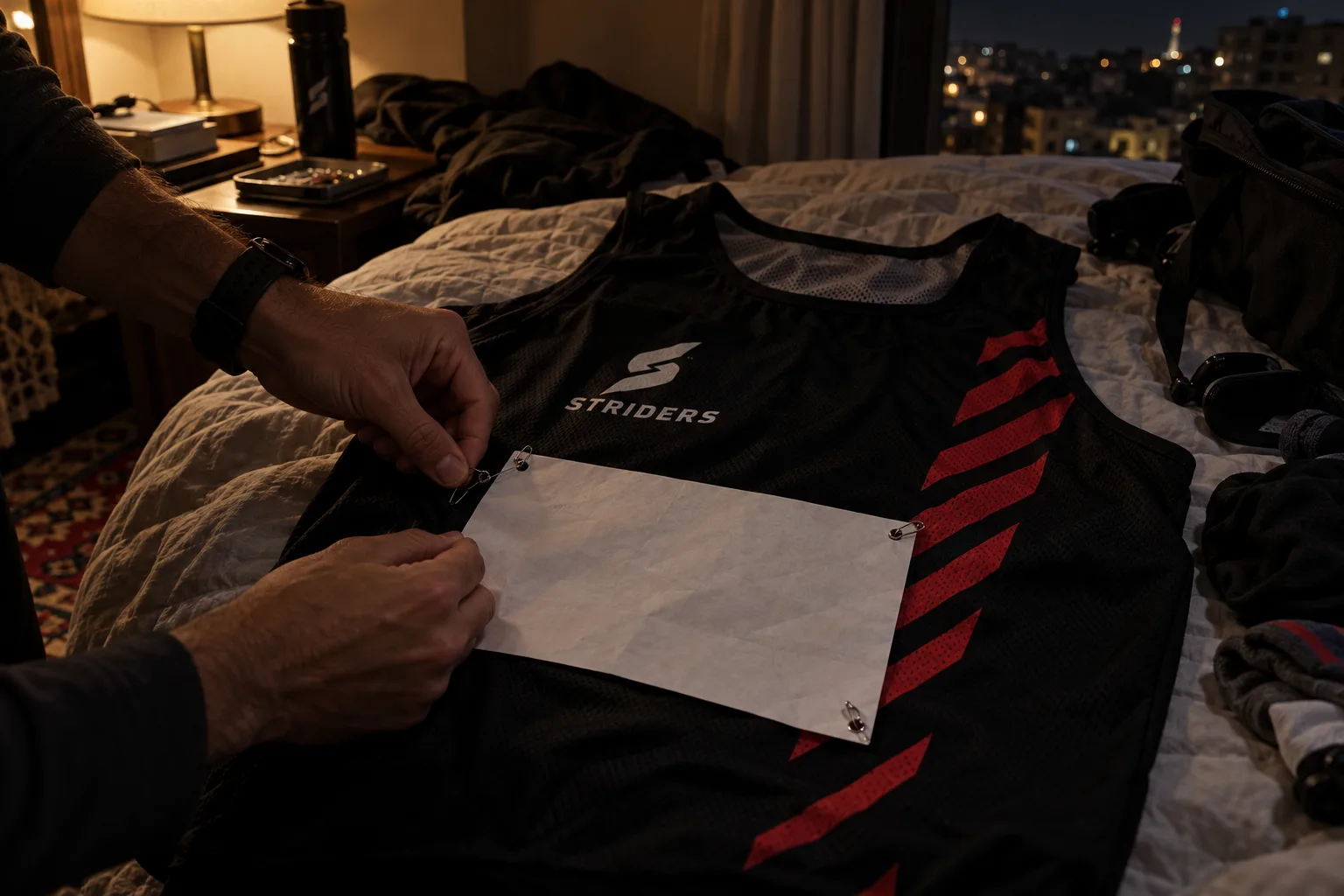
Lay it all out so the morning is boring:
- Kit, including socks and anything that might rub
- Bib, with pins ready (or a race belt)
- Timing chip, if it is separate
- Watch charged, with the right screen set up
- Alarm set, plus a backup
- A plan for getting there and parking, and what time you leave
- A post-race bag with layers and a snack
Eat a normal dinner, not a giant experiment. Then go to bed at a sensible time, even if you do not fall asleep straight away.
What should I eat before the race?
The breakfast you have tested on long runs. Eat it early enough to digest, and sip water. If you cannot remember what you ate before your last good long run, write it down next time so you can repeat it.
What should I carry?
It depends on the distance:
- 10K: very little. Keys, bib, maybe a small bottle at the start.
- Half marathon: decide in advance whether you will use a gel or just water at the stations, and carry what you have practised.
- Marathon: a real fuelling plan, practised on long runs, with enough to carry or collect on the way.
The compact list:
- Night before: kit, bib and pins, watch charged, alarm, transport plan, post-race bag
- Morning: tested breakfast, water, toilet, warm-up, gel or water plan
- After: walk, layers, food, water
How long should my warm-up be?
Counter-intuitively, the shorter the race, the longer the warm-up:
- 10K: around 10 to 15 minutes of easy jogging plus some drills.
- Half marathon: a shorter jog and a few mobility moves.
- Marathon: very little. Walk, loosen up and start gently; the first kilometres are your warm-up.
Our warm-up guide has a routine.
Also leave time for toilets. Queues before big races can be long, so go early, then go once more if you still have time. Know where your bag drop is and get to the start area before it fills up.
How do I pace the start, and what if it is hot or hilly?
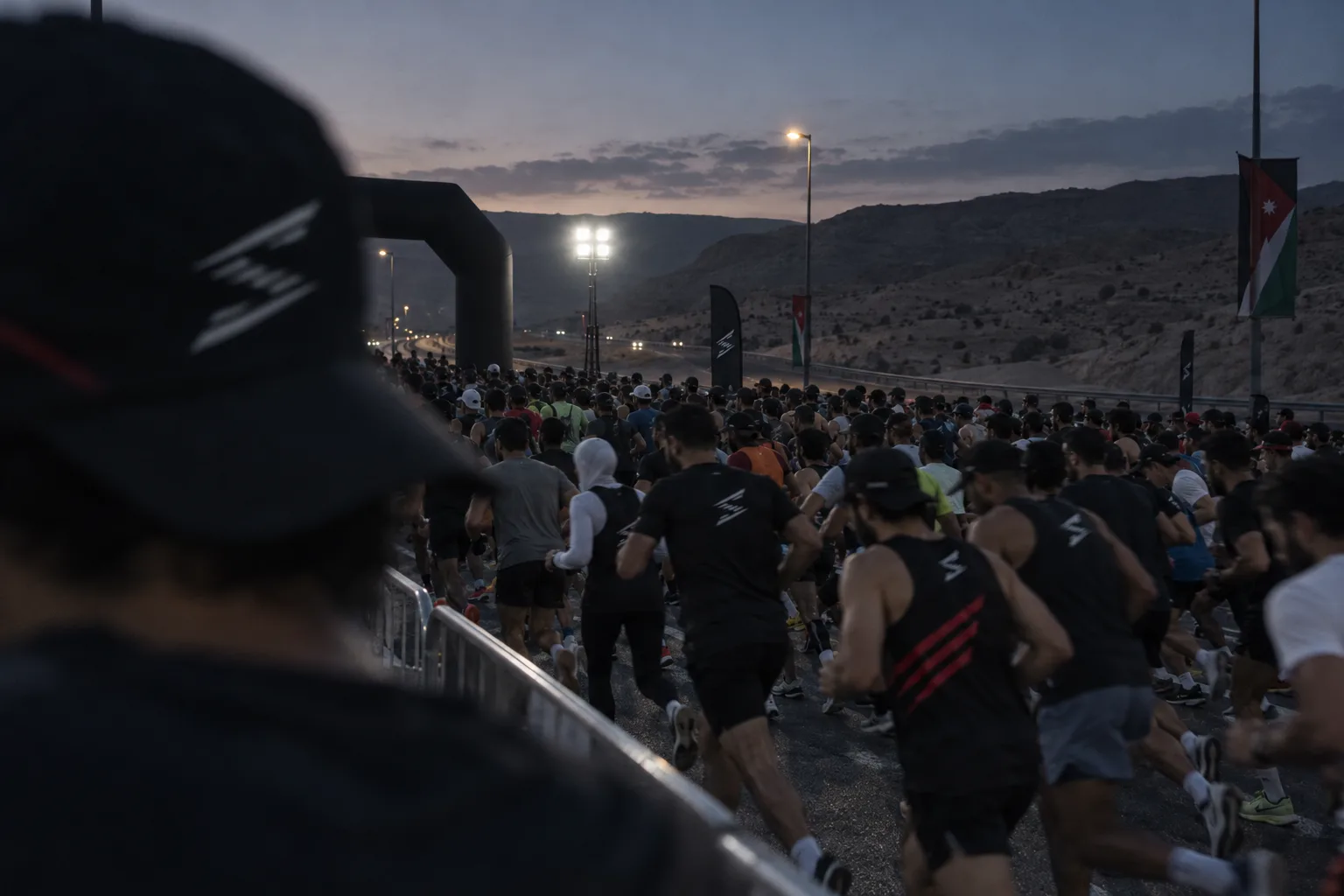
This is where races are won or lost. The start is crowded and exciting and everyone around you seems to be flying. Do not follow them.
- Plan your pace and hold it, even if it feels too easy.
- Check your watch in the first kilometre, then settle into your rhythm.
- If the start is on a hill, use effort, not pace. Short steps, steady breathing, and let the speed drop.
- If it is hot, go a touch slower than planned, drink at every station and pour water on your head or neck if you like. See summer heat.
- Speed up late if you feel good, not early.
The beginner mistakes guide covers starting too fast.
Drink stations. Know where they are, if the route has been published. Slow down, take a cup and drink properly, even if it costs a few seconds. Do not grab and gulp at full speed. Walking through the station is fine. If you do not need a drink, skip it, but do not skip them all in the heat.
What if things go wrong mid-race?
Even good plans wobble. A few common problems and sensible responses:
- You went out too fast. Slow down now, don’t try to hold on. A calm reset beats a collapse.
- Stomach trouble. Ease off, take small sips, and skip the next gel.
- Tight legs or a stitch. Shorten your stride, breathe deeply, and walk for a minute if you need to.
- A bad patch. Break the distance into small pieces, one station at a time.
- Sharp pain. Stop, and ask a marshal for help. No finish time is worth an injury.
Walking is not failing. Plenty of runners finish well by walking a short stretch.
What do I do after I finish?
- Keep walking for a few minutes. Do not stop dead.
- Put on warm layers, because you will cool down quickly.
- Drink, and eat something soon, ideally what you packed.
- Meet your friends, take a photo and enjoy it.
Take it easy for the next few days. A short walk is plenty. To practise your routine in good company, join our Monday open run.
The bottom line
Do nothing new, prepare the night before, and start slower than you want to. Warm up longer for the shorter races, drink properly at the stations, have a calm plan for when things wobble, and look after yourself afterwards. The best race-day plan is the simple one you have already practised.
General advice, not medical advice. If pain persists, see a doctor or physiotherapist.