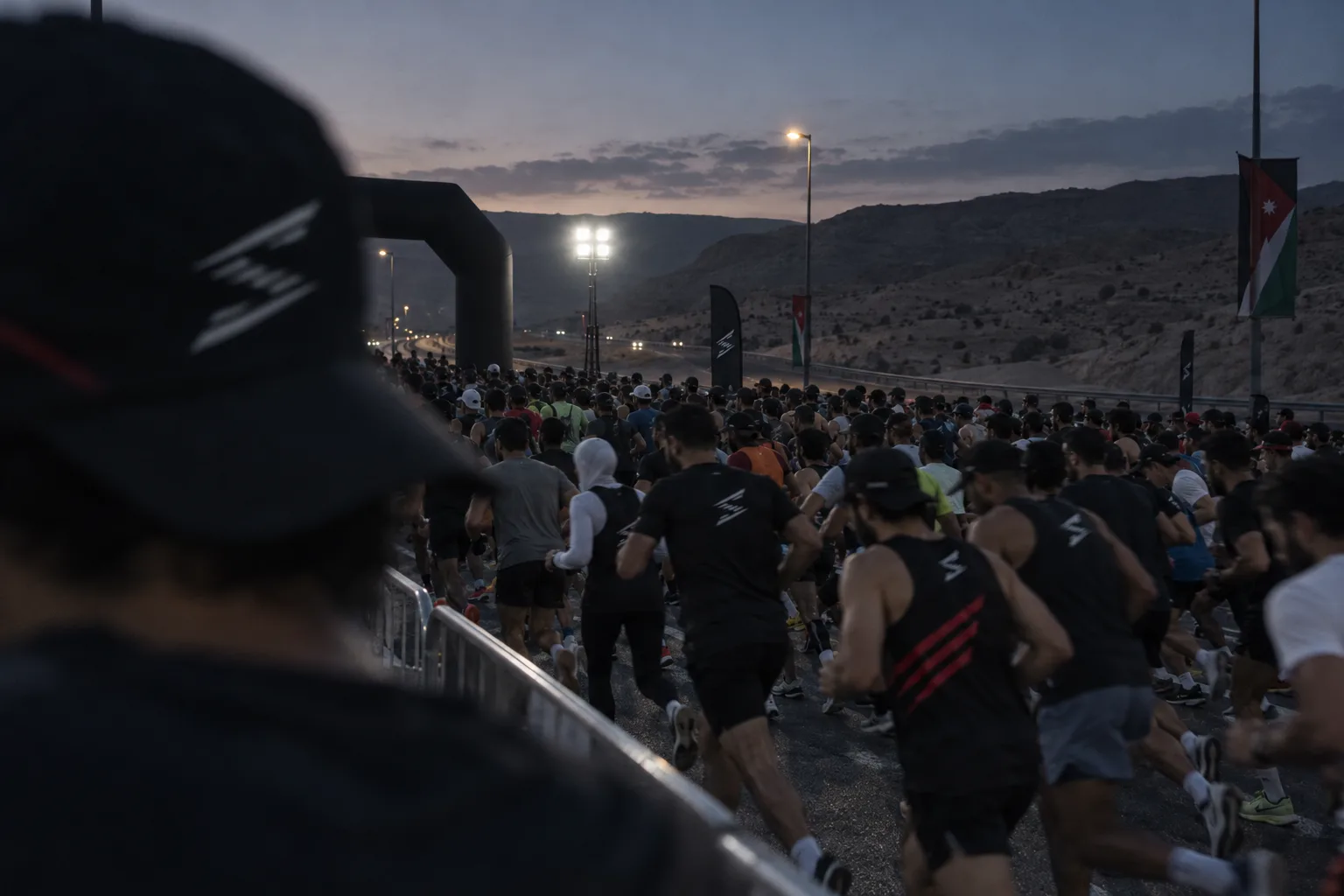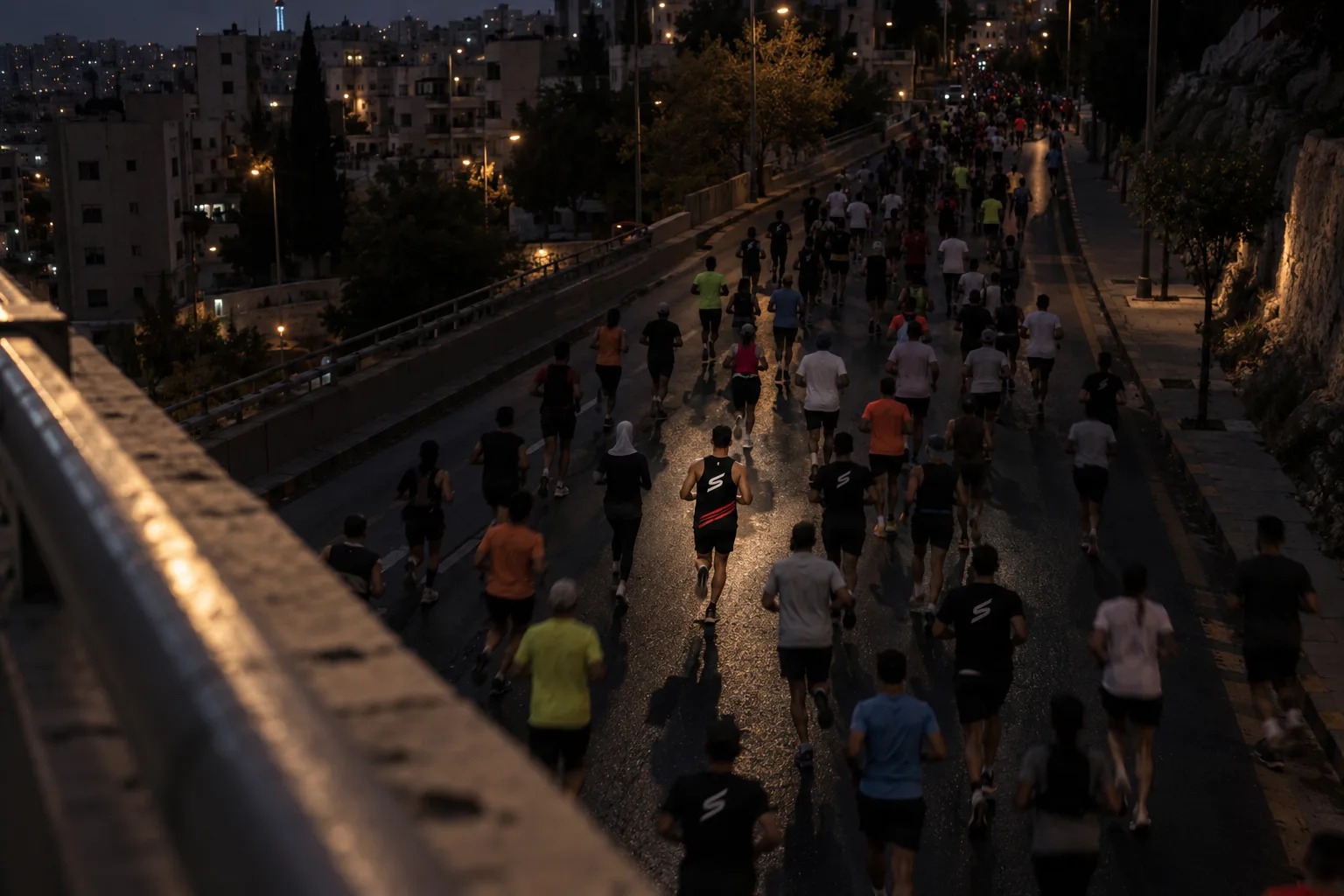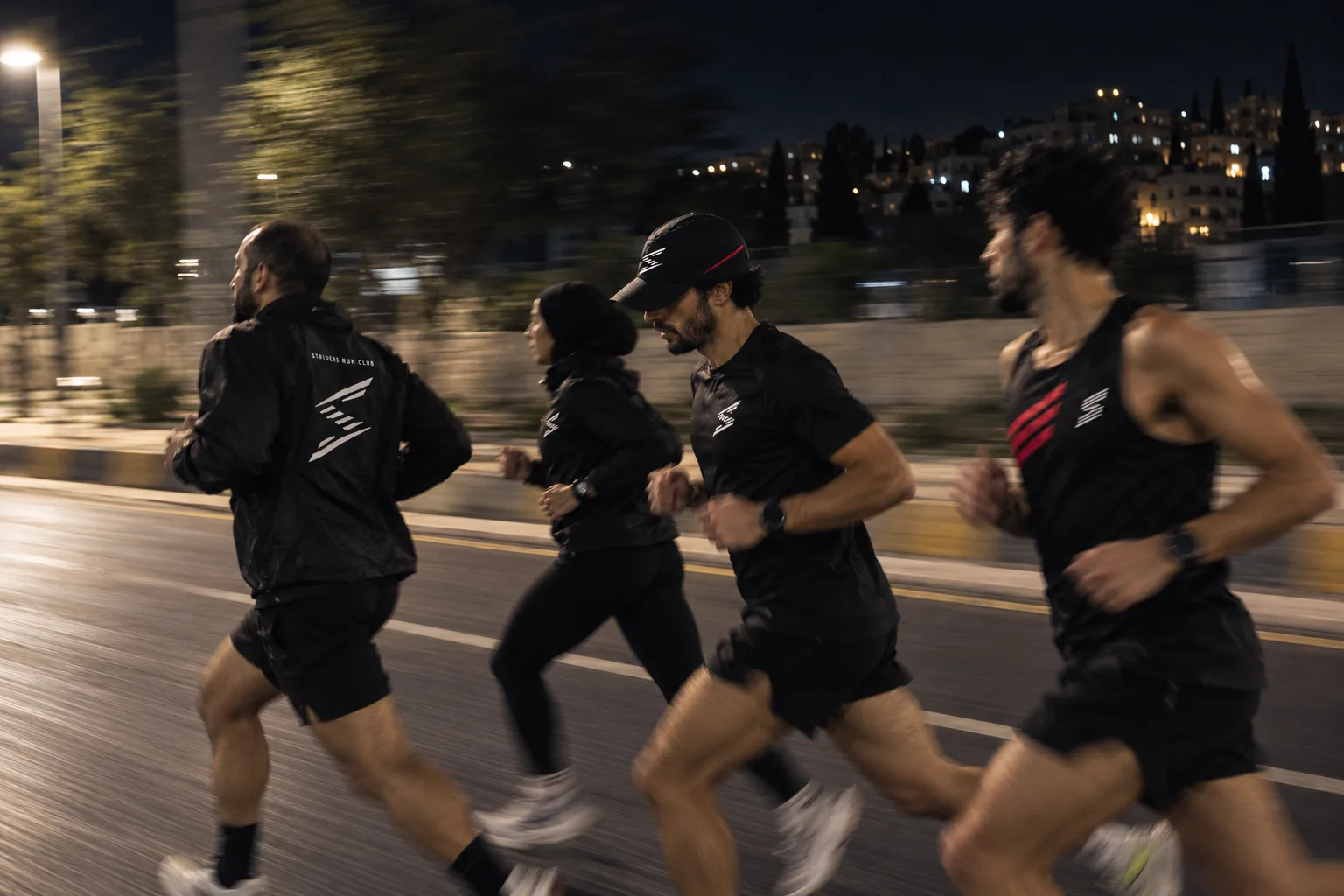
The 10K is a strange distance. It is short enough that you can start too fast and still feel fine for a while, and long enough that the bill arrives before the finish. Most blown 10Ks are lost in the first kilometre, when the crowd, the adrenaline and a fresh pair of legs all say go.
Good pacing is not complicated. It is a plan you make before the race and a bit of discipline in the first few minutes. This guide covers how to choose a pace, how to hold it, and what to do when your route has climbs, which in Amman it usually does.
How do I choose a target pace?
Start from something real. A recent 5K or 10K, or a hard parkrun-style effort from the last month, is a far better guide than a number you hope for. Put it into the pace calculator to see what pace each distance suggests, then pick a target close to that.
If you have no recent result, use feel. A 10K should be comfortably hard: you can say a few words, not a full sentence, and you are working but in control. The pace charts can help you turn a goal finish time into a pace per kilometre.
Be honest about training, too. If you have been running only a few weeks, your goal is to finish well, and a time is a bonus.
How fast should the first kilometre be?
Slower than you want. Aim for the first one or two kilometres to be a few seconds per kilometre easier than your target pace. You will feel like you are holding back, and that is the right feeling.
Why it works:
- Early speed borrows energy you pay back with interest later.
- A calm start lets your breathing settle before the effort builds.
- Everyone around you is going too fast. Let them go. You will pass many of them from kilometre five on.
Check your watch for the first minute, then put your attention on your breathing and effort instead.
How should I run the middle kilometres?
This is the part where you simply hold. From kilometre two to about seven, settle into your target pace and make it boring. Relax your shoulders, keep your steps light, and check in with yourself every kilometre:
- Is my breathing steady?
- Is my pace within a few seconds of the plan?
- Could I hold this for another ten minutes?
If the answers are yes, stay put. This is where the race is quietly built. Do not chase runners who surge past, and do not drift slower because it feels easy. Easy in the middle is the point.
How do I handle hills in a 10K?
By effort, not by pace. A climb costs more than flat ground, so holding your flat pace uphill spends energy you cannot get back. Our hills guide covers the technique in detail, but the short version is:
- Shorten your steps and keep them quick on the way up.
- Let your pace drop on the climb. Keep the same effort.
- Use the downhill to recover a little, with light steps and a relaxed body, without braking.
- Do not sprint the crest. Keep the effort and let the road flatten.
If your route has a big climb, plan for it. Expect a slower split there, a slightly quicker one after, and aim for an even effort overall. Your average pace on a hilly course will not match your flat 10K, and that is fine.
When should I start pushing?
Around the last two kilometres, and only if you feel in control. If you reach kilometre eight and you still have something, lift your effort bit by bit. If you reach it and you are tired, hold on and keep your form.
Finishing hard is satisfying, but finishing evenly is the real skill. If your last kilometre is your fastest, you paced it well. If your first was your fastest, you will know for next time.
How do I train for a 10K pace?
Race pace feels easier when you have practised it. Work in a little tempo running, covered in our guide to tempo runs, and some intervals a bit faster than race pace, explained in intervals explained. Keep most of your weekly running easy, because that is what builds the base under everything else.
If you are new to racing, our race-day checklist takes the guesswork out of the morning itself.
How does the club help with 10K pacing?
On Wednesdays at 6:30 pm, the track session is coached intervals at Al Hussein Sports City, run in pace groups. It is a good place to learn what a given pace feels like, repeated and controlled, without a hill getting in the way.
Saturdays at 6:30 am, the long run covers 14 to 25 km on the Dabouq hills, which teaches you to read effort on climbs. And the Monday Open Run at 6:30 pm is the easy one: open to everyone, just download the app and check in. Together they cover the three things a good 10K needs: speed, hills and an easy base.
Summers in Amman are hot, so if your race is in warm weather, slow your target a little. Our summer heat guide explains how much to give.
The bottom line
Choose a pace from a real recent effort, start a little slower than you want, hold steady through the middle, and only push when you have something left. On hills, run the effort and let the pace change.
Do that and you will finish the 10K feeling like you ran it, instead of surviving it.
General advice, not medical advice. If pain persists, see a doctor or physiotherapist.