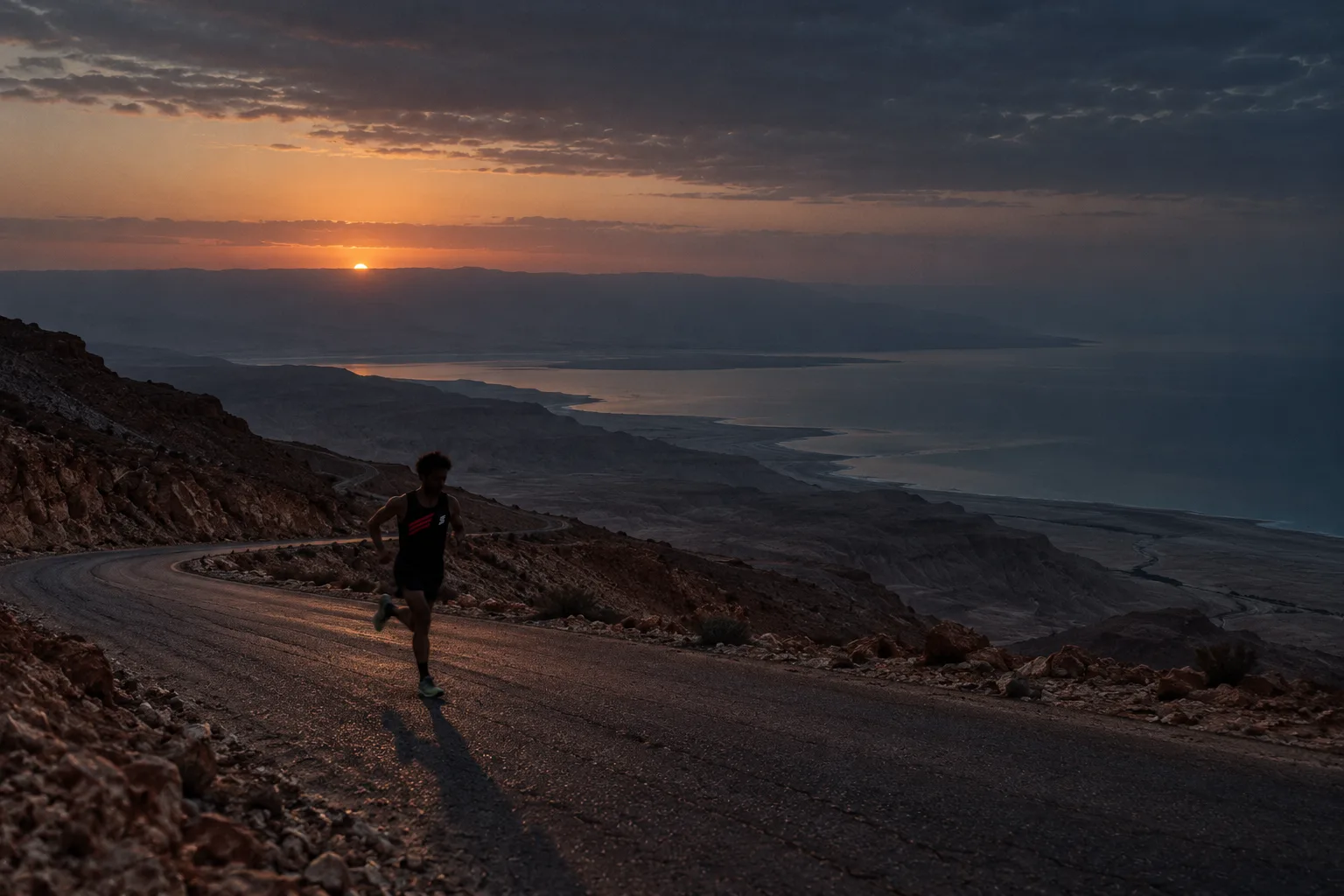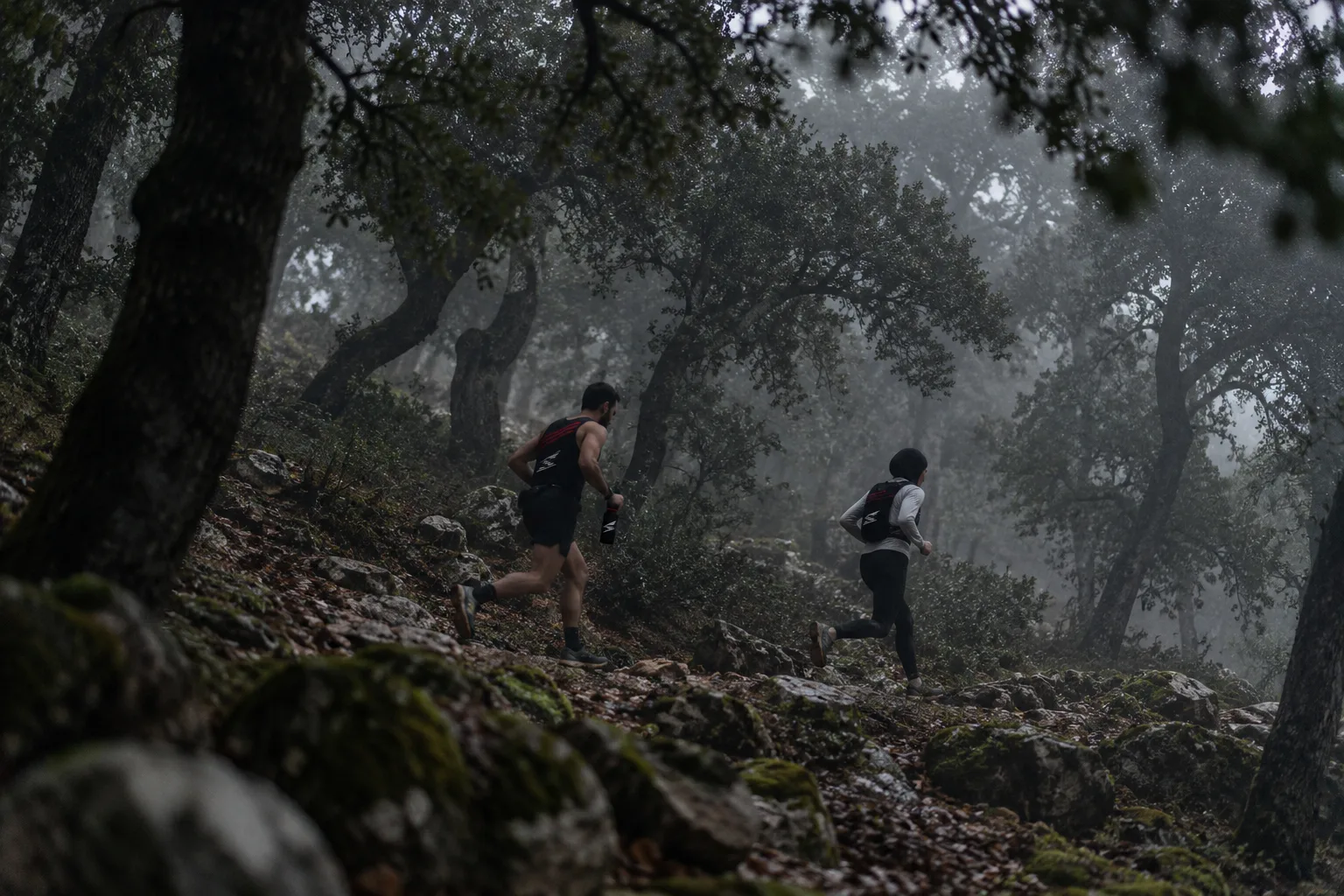
Amman is built on hills. Go for a run almost anywhere in the city and you will climb something within the first ten minutes. Dabouq, where our Saturday long run goes, is the best example: rolling, steady, and never really flat.
The runners who struggle on hills are rarely the least fit. They are usually the ones who treat a climb like flat road, hold the same pace for as long as they can, and arrive at the top with nothing left. This article is about doing it differently.
Why do hills feel so much harder?
Because they are harder. Going uphill, your body lifts its own weight against gravity on every step, so the same speed asks for more from your legs, your lungs and your heart. Nothing is wrong with you when your breathing jumps on a slope. That is the cost of the climb showing up.
It also explains why a hill can ruin a run you were enjoying. If you keep your flat-ground pace on the way up, you spend effort you do not get back. The legs go heavy, the breathing gets ragged, and the rest of the run pays for it.
Should I run hills by pace or by effort?
Effort. Pick the effort you would use on a flat road that day, and hold that feeling on the way up. Your pace will drop, sometimes by a lot, and that is the whole point.
A simple check is the talk test from our start-easy guide. On an easy run you should still be able to speak in full sentences. If a climb has you down to single words, you are above your effort, so shorten up or walk for a bit. Walking a steep section on a long run is a smart choice, not a failure, and plenty of strong runners do it.
How should I change my stride going uphill?
Make everything a little smaller and a little quicker.
- Shorten your steps. Long strides on a climb are tiring and hard on the calves.
- Keep your cadence up, with quick, light steps rather than heavy ones.
- Stay tall, with your chest open and a slight lean from the ankles, not a fold at the waist.
- Look a few metres ahead, not at your feet and not at the top.
- Let your arms swing front to back to help the rhythm.
Do not sprint the last few steps either. Keep the same effort over the crest, and let your breathing come back as the road levels out.

How do I run downhill without wrecking my legs?
Downhills feel like easy speed, and that is exactly the trap. Your quads work hard to brake you on every step, and tired legs get beaten up quickly, so a long descent late in a run is where soreness is born.
- Take light, quick steps instead of big bounding ones.
- Lean slightly forward with the slope. Leaning back makes you brake with every step.
- Keep your arms loose and a little wider for balance.
- On steep, loose or wet ground, slow down. Control matters more than speed.
If your legs feel sore for a couple of days after a hilly run, that is normal when you are new to it. If something sharp or joint-deep sticks around, read our note on common running injuries.
What are hill repeats, and should I do them?
A hill repeat is simple: run up a hill at a hard but controlled effort, jog or walk back down to recover, then go again. Hills let you work hard without the pounding of fast flat running, because the slope does part of the job of slowing you down.
Once you have a few easy weeks behind you, try this on a hill that takes about 30 to 60 seconds to climb:
- Warm up first, with easy running and the drills in our warm-up guide.
- Run up hard but smooth, with the short quick stride from above.
- Recover on the way down, then repeat a few times.
- Finish with easy running to cool down.
Start with fewer repeats than you think you need. Hills are hard work, and the gain comes from doing them consistently, not heroically. It follows the same logic as intervals.
How do I read the pace on a hilly route?
Do not judge a hilly run by its average pace. A route with real climbs will show a slower average than the same distance on a flat track, and that is not lost fitness. It is simply a different job.
Look at how it felt. Was your effort steady? Did you finish feeling like you could do a bit more? If yes, it was a good run, whatever the watch says. The same goes for race plans: on a hilly course, expect to be slower on the climbs, a touch faster on the descents, and aim for an even effort overall.
How does the club use hills?
On Saturdays at 6:30 am, the long run covers 14 to 25 km on the Dabouq hills. Nobody is expected to hold a fixed pace up those slopes. Run it by effort, walk when you need to, and let the group and the app’s coach in your ear help you settle.
The hard, structured work lives elsewhere. On Wednesdays at 6:30 pm, the track session is coached intervals in pace groups, on flat ground where the effort is easy to control. That split is deliberate: hills build strength and patience on the weekend, the track builds speed in midweek, and Monday’s Open Run is the easy start to the week.
The bottom line
Hills cost more, so pace on a climb will be slower. That is not a problem to fix. Run by effort, take shorter and quicker steps going up, stay light and relaxed coming down, and keep your harder hill work to a few repeats once you are comfortable.
Give it a few weeks and the same Dabouq climb that flattened you will start to feel manageable. If you are building toward a longer distance, the half marathon guide shows how hills fit in.
General advice, not medical advice. If pain persists, see a doctor or physiotherapist.