
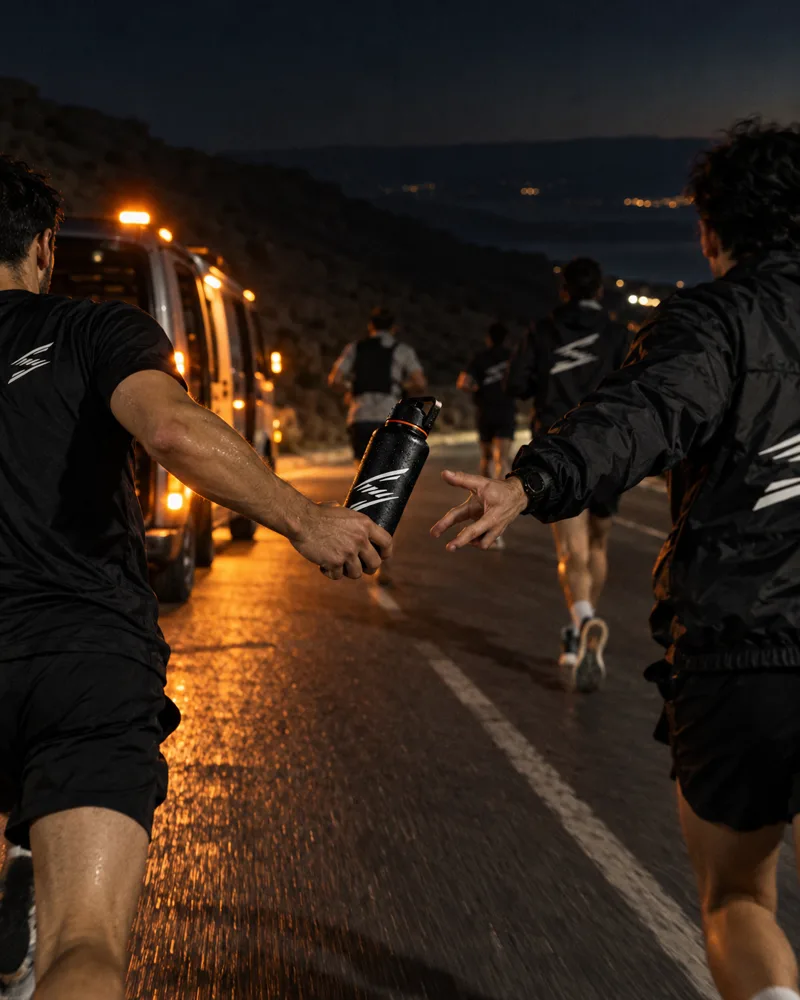
A relay ultra takes one huge distance and shares it between a team. Instead of one person running the whole thing, each runner covers several stages, handing over to a teammate, resting, and then going out again. Red to Dead is a well-known example in this part of the world.
This article is about the training behind that kind of event, not the event itself. We are not stating dates, distances, stage lengths or course details here. For those, check the organiser’s site for this year’s information, and read the team rules carefully. If you want the club’s plan, see the Red to Dead training page.
What makes a relay ultra different from a normal race?
You run more than once, and you do it on tired legs. In a relay ultra a runner typically does several stages with rest in between, often at different times of the day and night, but check your event’s own format. So the challenge is not one big effort but repeated moderate efforts with poor recovery in the gaps.
That changes how you train:
- Endurance matters more than top speed.
- Recovery matters, because you will need to run again soon.
- Logistics matter: food, drink, clothing, sleep and getting to your next hand-over.
- Teamwork matters, because everyone’s day depends on everyone else.
How should I build the base?
Slowly, and with plenty of easy running. Before anything specific, you need a solid weekly routine that your body is used to. Our ultra plan and the marathon plan both show how a long build looks.
Keep the same rules as any build: add a little at a time, keep most runs easy, and take rest days. The build slowly article explains the idea, and rest and sleep matters even more when the event itself will cut into your sleep.
How do I train for running on tired legs?
By practising it. The simplest way is to run twice in one day, or on back-to-back days, with the second run easy and shorter. You are not trying to race either one. You are teaching your body to keep going when it is not fresh.
- Make a long run on Saturday followed by an easy run on Sunday.
- Occasionally add a short, easy second run in the evening after a morning session.
- Keep all of this easy, and cut back if anything starts to hurt.
Our Saturday long run at 6:30 am on the Dabouq hills is a good anchor for this. The climbs also build the leg strength you will lean on late in the event.
How do I get ready for running at night?
Practise it, with proper kit and company. Night running changes your pace, your balance and your focus, and the sleepy hours are hard even for fit runners.
- Run in the evening and after dark with a head torch or bright front light, and wear reflective gear.
- Choose safe, lit or familiar routes, and run in a group where you can.
- Get comfortable with eating and drinking while it is dark.
Monday’s Open Run and Wednesday’s track session both start at 6:30 pm, which in the darker months means running into the evening. That is useful practice.
What about food, water and sleep?
Practise all of it. The common advice is the same as for any long event: try your food and drink in training, never anything new on the day, and eat and drink little and often rather than waiting until you are empty. Read our guides on hydration and electrolytes and fuelling long runs.
Sleep will be short, so go into the event well rested. Bank easy weeks before it, not heroic ones. If you have a medical condition or any doubt about your readiness for an event this long, talk to your doctor first.
How does the team prepare together?
A relay is only as good as its planning. A few things worth agreeing as a team, well before the event:
- Who runs which stages, and a plan B if someone is ill or injured.
- How hand-overs work, and who supports the team at each point, as the event rules allow.
- What each person needs: clothing for heat and cold, food, water, and a charged phone.
- A group chat and a shared checklist, so nobody is guessing at 3 am.
Run together at least once before the event. A group long run is a good rehearsal for the pace, the chatting and the patience that a long team day needs.
What if I have never run an ultra before?
You are not alone, and a relay is a gentler way in than running one huge distance on your own. Each stage is a manageable piece, and you have teammates to lean on. Still, be honest about your base. If you are new to running, spend a few months on the beginner plan before you commit to a team, and tell your teammates what you are comfortable with so stages can be shared sensibly.
A good test is simple: can you run comfortably for an hour, a few times a week, without pain the next day? If yes, you have a foundation to build on. If not, build that first, and join a team next year instead of forcing it now.
The bottom line
A relay ultra rewards runners who can run well when tired, stay calm in the dark, and work as a team. Build your base slowly, practise back-to-back efforts, rehearse night running and your fuelling, and agree the plan with your teammates early.
Always check the organiser’s site for this year’s details, and see our Red to Dead plan for the training side. Then enjoy it, because the stories from a day like this tend to last longer than the soreness.
General advice, not medical advice. If pain persists, see a doctor or physiotherapist.