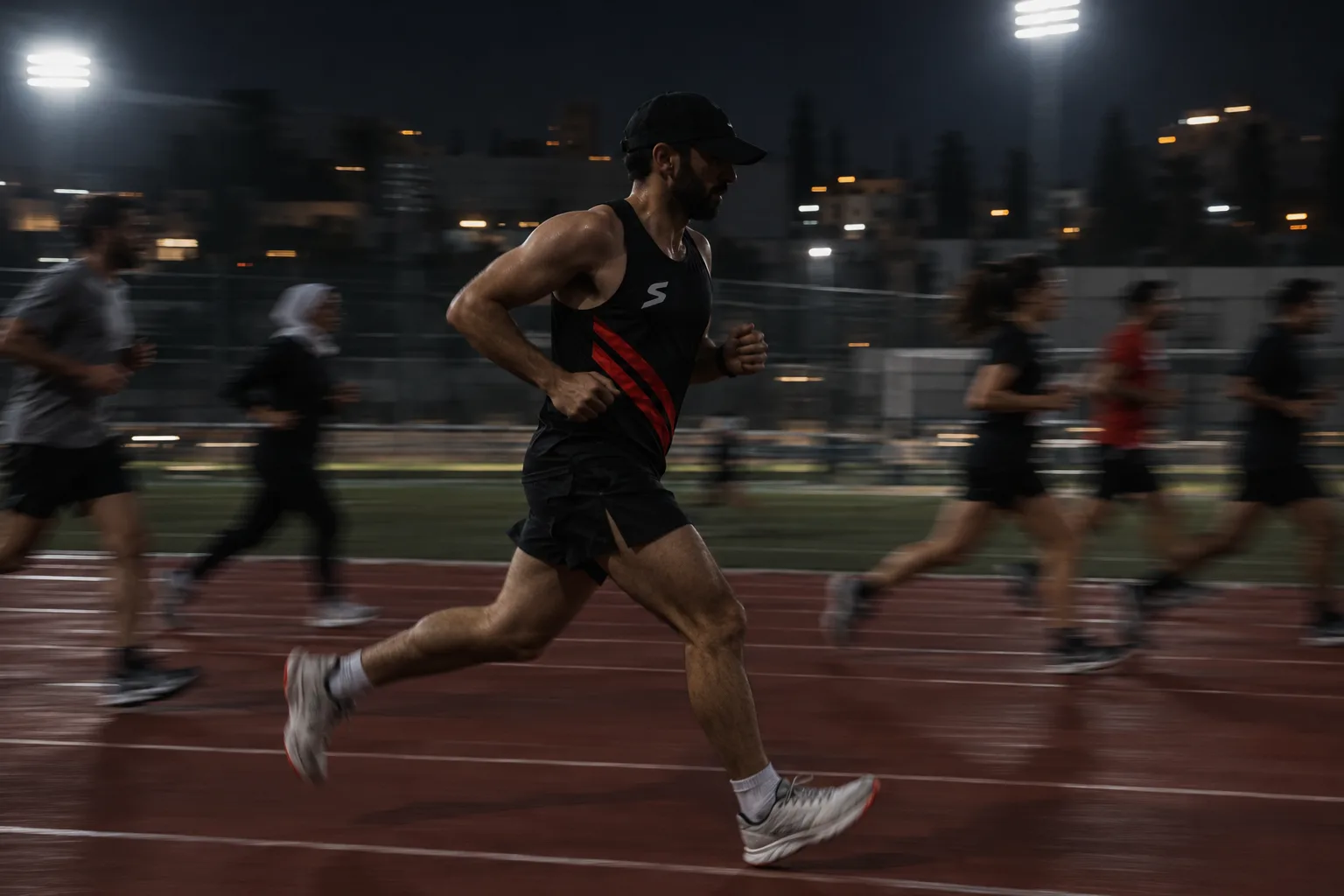
A half marathon is 21.1 km. That sounds like a lot until you notice it is built from the same ingredients as every shorter race: easy running, a little effort, and patience. Most people who finish their first one did nothing exotic. They showed up week after week and let the long run grow.
This guide is the shape of that process. It is a common approach, not a rule, so bend it to your life. If you have never run before, begin with starting easy and come back once 30 minutes of running feels normal.
How long should I train for a half marathon?
A common range is about 12 to 16 weeks. The honest answer depends on what you can run today. If you can already run 5 to 6 km without stopping, a shorter build can work. If you are closer to your first 5K, give yourself more weeks, or do a base-building block before the plan starts.
More time is never a problem. Rushing is. Sudden jumps in distance are a classic way to end up with sore shins or knees, so read build slowly before you commit to a date.
What does a training week look like?
Keep it simple. Most weeks have three or four runs:
- Easy runs (one or two). Conversation pace. They do most of the work, even if they feel too gentle.
- One quality session. A bit of harder running, such as intervals or a steady tempo.
- One long run. The anchor of the week, run slowly.
Here are two example shapes. Treat them as sketches, not prescriptions.
If you are newer to running (three runs):
- Day 1: easy run, 30 to 40 minutes
- Day 3: easy run with a few short, slightly quicker stretches in the middle
- Day 6: long run, easy, with walking breaks if you want them
If you already run regularly (four runs):
- Day 1: easy run
- Day 2: quality session, such as intervals or tempo
- Day 4: easy run
- Day 6: long run
Everything else is rest, or a walk. Rest is part of the plan, because that is when your body adapts.
How do I build the long run, step by step?
Start from the longest run you can do comfortably today and add a little at a time.
- Lengthen the long run gently over a few weeks.
- Every third or fourth week, step back to a shorter one so your body can catch up.
- Do not add distance and speed in the same week.
- Run it slowly. If you cannot chat, you are going too fast.
- Walking breaks are allowed. Plenty of strong runners use them.
Nobody needs to run the full 21 km before race day. Getting comfortably to somewhere in the high teens is a fine goal for many people, and the crowd and the adrenaline carry you the rest.
What should I practise on long runs?
Long runs are rehearsals. Use them to test everything you plan to do on race day:
- Fuel. Water only, a sports drink, a gel, a few dates, something else. Everyone’s stomach is different.
- Drinking. Sip regularly rather than waiting until you are thirsty.
- Breakfast. Eat the same thing, at the same time, before your long runs.
- Kit. Same shoes, socks and shorts, so you find rubbing spots early.
- Pace. Practise starting slowly and finishing a touch stronger.
If a plan fails on a Saturday, you have lost nothing. If it fails on race day, you have lost a lot. Our race-day checklist shows what to carry once you know what works.
How should I pace the race?
Start slower than feels necessary. The first few kilometres are full of energy and crowds, and it is easy to be dragged out too fast and pay for it late.
- Aim for even effort, not even splits at all costs.
- Hold back for the first 3 to 5 km, then settle.
- On hills, think effort, not pace. Your speed will drop on the way up, and that is fine. Our guide to Amman’s hills covers the technique.
- If you feel good late, speed up in the last few kilometres.
Choose a goal range rather than a single magic number, and practise it in training.
What about the tough middle miles?
Somewhere in the middle of a long run or a race, the early excitement fades and the finish is still far away. Almost everyone hits this patch. It is not a sign you have failed.
- Break the distance into small pieces: the next water point, the next kilometre.
- Check your form: relax your shoulders, shorten your stride, unclench your hands.
- Take a sip or a bite of what you planned. A low patch is often fuel or thirst.
- Remind yourself that you have done long runs before. This is just another one.
If the discomfort is sharp pain rather than tiredness, that is different. Slow down or stop.
When should I rest or skip a run?
Missing one run will not undo your training. Pushing through illness or pain can. Skip or shorten a session when:
- You are properly unwell, or have a fever.
- You have sharp or worsening pain, especially in a joint.
- You have slept badly for several days and feel flat.
Do not try to catch up by cramming two sessions together. Just carry on with the plan. If something keeps hurting, speak to a professional.
What is the taper, and what about race morning?
The taper is the last one to two weeks, when you cut the volume but keep a little gentle running. Running less can feel strange, and you may feel restless. That is normal. You are not losing fitness; you are arriving fresh. Sleep, eat normally, and resist squeezing in a last big run.
On race morning, wake early, eat the breakfast you tested, and arrive with time to spare. Warm up briefly, line up honestly for your pace, and start easy.
In Amman, a local half marathon makes a great target. Pick one, count back your weeks, and write the date where you can see it.
Can the club help?
Yes. Our Saturday long run is at 6:30 am for members: 14 to 25 km through the Dabouq hills, paced to your goal race, with coffee afterwards. On Wednesday evenings the members’ track session gives you coached intervals in pace groups. Membership is 40 JOD a month and opens soon, with the plan in the app.
The bottom line
Give yourself a realistic runway, often around 12 to 16 weeks. Run mostly easy, add one quality session and one long run, and let the long run grow slowly. Practise your drinks and fuel, expect a rough patch in the middle, taper in the last week or two, and start the race calmer than you think you need to. Your first half marathon is mostly about showing up consistently.
General advice, not medical advice. If pain persists, see a doctor or physiotherapist.