Saturday morning is the run most of the week leads to. It is longer than anything else you do, it starts early, and it climbs. If you have only done the Monday Open Run so far, it can look like a different sport.
It is not. A long run is just an easy run that keeps going, and most of what makes it go well or badly happens before you start and in the first few kilometres. This article walks through the whole thing, from Friday evening to Saturday afternoon.
What should I do the night before?
Keep Friday boring. An ordinary dinner you know sits well, a few glasses of water through the evening, and bed at a sensible time. A 6:30 am start means an early alarm, so the sleep has to come from the front end of the night.
- Lay out everything you will wear, including socks and shoes you have already run in.
- Pack your water, anything you plan to eat, your phone and a light layer if it is cool.
- Charge your phone so you can check in with the app and use it if you need help.
- Skip the heavy, very late meal and the big night out. Both show up at kilometre ten.
Nothing here is clever. It just means that on Saturday morning you only have to get up and go.
What should I eat and drink in the morning?
Something small and familiar, with a glass or two of water. With an early start you rarely have time for a full meal, and you do not need one. A piece of bread with honey, a banana or a couple of dates is enough for many runners. Give it what time you can before you set off.
What and when to eat is covered properly in what to eat before and during long runs, so we will not repeat it here. The one rule worth saying twice: try new foods on a normal Saturday, never before a race.
How fast should I run it?
Slower than you think. The long run is an easy run, and easy means you can speak in full sentences. If you cannot, slow down. Our start-easy guide explains the talk test.
On the Dabouq hills, forget your pace on the watch. Every climb will pull it down and every descent will push it up, and chasing a number just makes you work too hard on the uphills. Hold an even effort instead. If the coach asks for a steadier last section on a given week, that comes at the end, once the easy part has been done properly.
The usual mistake is the first 5 km. You are fresh, the group is chatty, the road feels good, and you run with someone a little faster than you. You pay for it on the second half.
Is it OK to walk the steep bits?
Yes. Walking a steep climb on a long run is a smart choice, and plenty of strong runners do it. A brisk walk up a hard slope often costs you very little time and saves a lot of energy for later.
- Walk when the climb takes you past talking pace.
- Walk with purpose: short quick steps, hands on thighs if it helps.
- Start running again at the top, gently, once your breathing settles.
Our hills guide covers how to climb and how to come down without wrecking your legs.
What should I carry?
Water first. Amman is dry even when it is not hot, and in summer you will sweat a lot on a long climb. Carry a bottle or a soft flask, and drink a little and often rather than a lot at once. See hydration and electrolytes for more.
On longer runs, carry something small to eat as well, and start on it early rather than waiting until you feel empty. Dates, small pieces of bread, or chews you have tried before all work. The detail is in the fuelling guide.
What if I fall off the back?
It happens to everyone, and it is fine. A long run is not a race, and being at the back does not mean you are in the wrong group.
- Do not sprint to catch up. That burns the energy you need for the rest.
- Settle into your own easy effort and let the gap be.
- Keep your phone with you, so you can stay in touch with the group through the app.
- If you feel unwell, dizzy, or something hurts sharply, stop, tell someone, and do not push on alone.
Next week, start slower. Or cut the run short and finish with the group. Running less of it well beats running all of it badly.
What should I do after?
The session is not over when you stop. Walk for a few minutes, drink, and eat something within the next while, ideally with some carbohydrate and protein. A normal breakfast does the job.
Expect to feel tired that afternoon, and maybe a bit stiff the next day. Keep Sunday easy or take it off. Our notes on rest and sleep and post-race recovery apply to big training runs too.
How does the club do it?
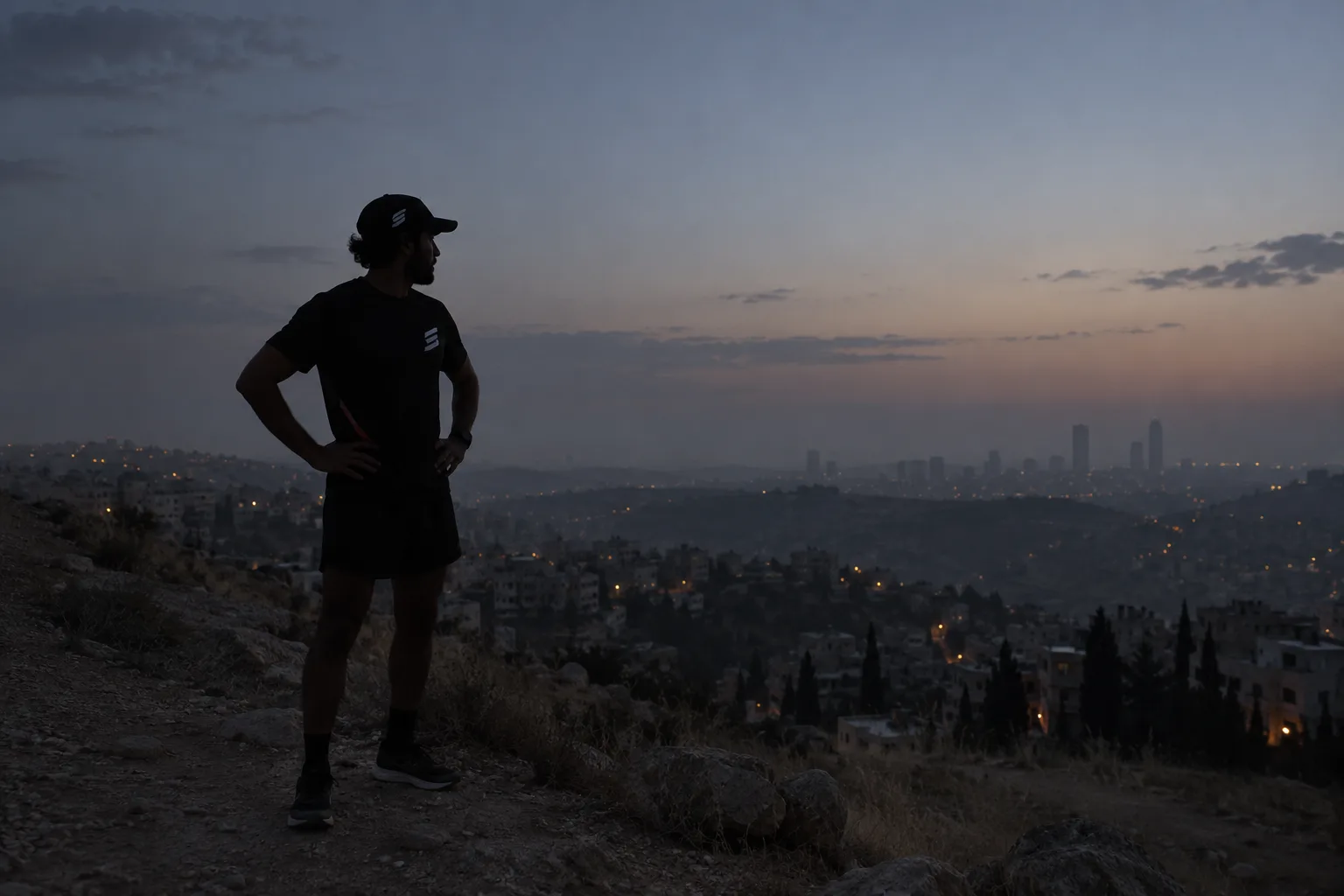
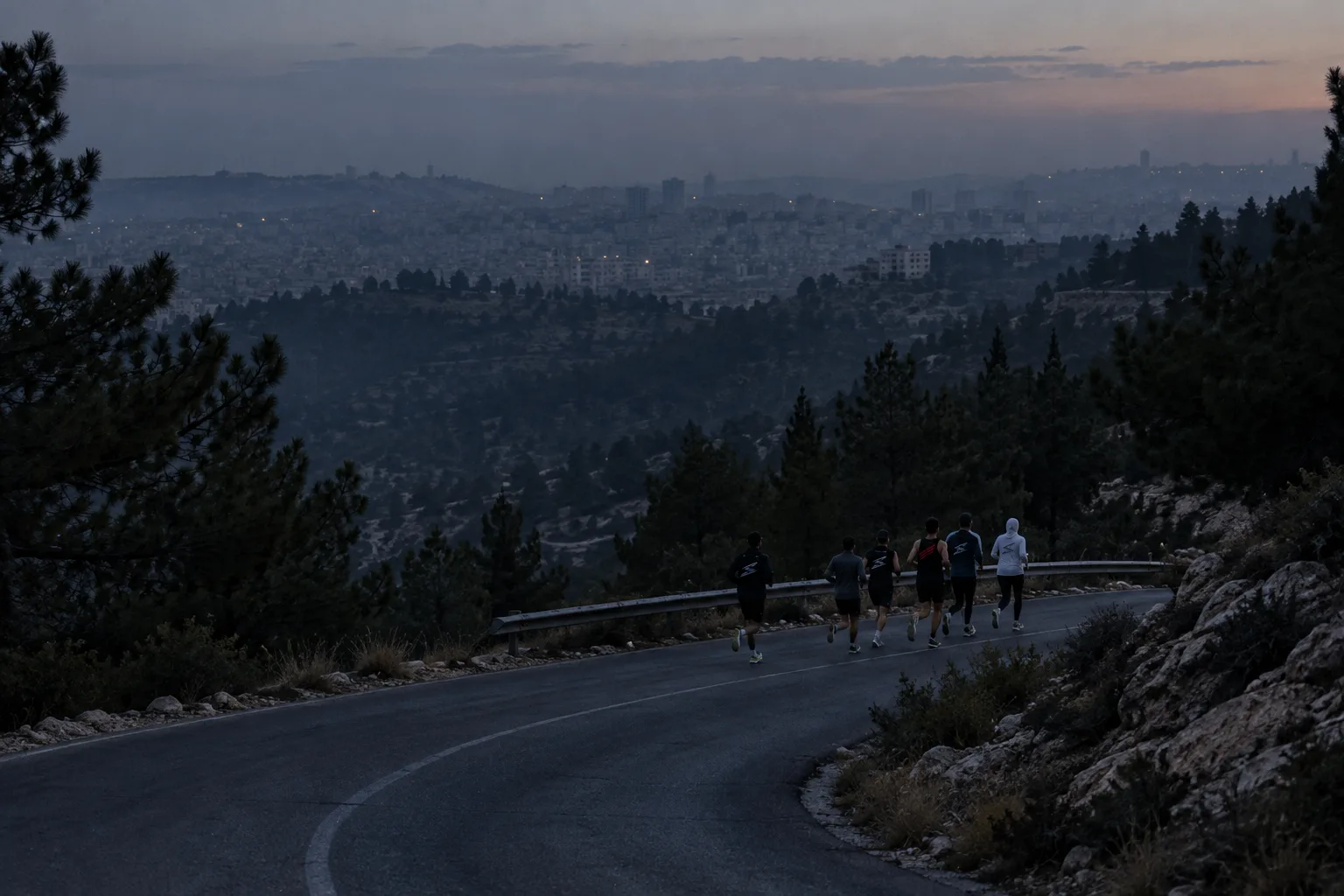
The Saturday long run starts at 6:30 am and covers 14 to 25 km on the Dabouq hills. We run in groups, start together, and nobody is left on their own.
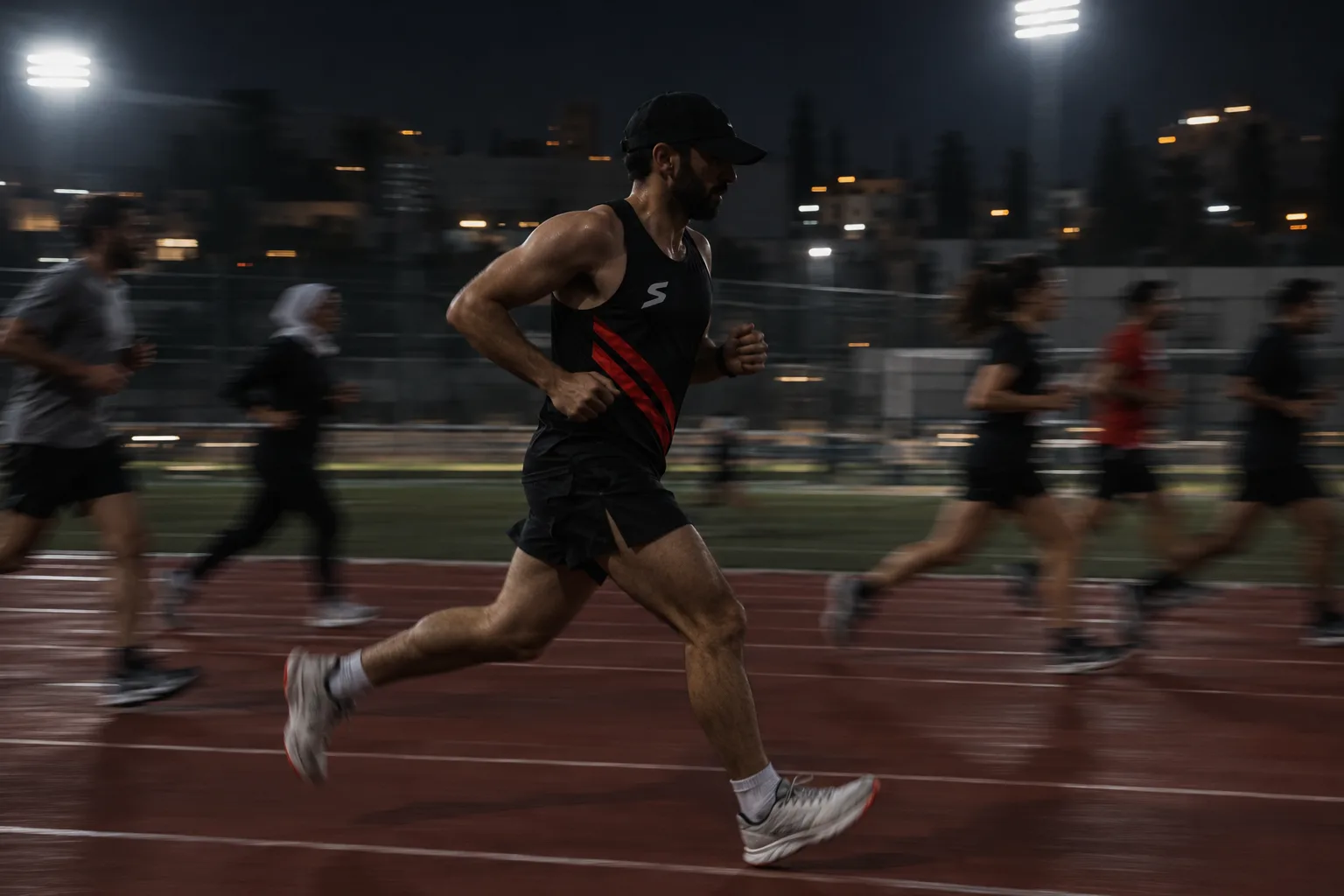
If you are new, do not make it your first session. Come to the Monday Open Run first: 6:30 pm at Al Hussein Sports City track, open to everyone, just check in with the app. Once easy running feels normal, try Saturday and do a shorter part of it. The Wednesday session adds structure later. If you are building towards a race, our half marathon and marathon plans show how the long run grows week by week.
What mistakes should I avoid?
- Starting too fast because you feel fresh.
- Chasing pace on the hills instead of holding effort.
- Leaving without water, or waiting until you are thirsty to drink.
- Trying new shoes or new food on a long run.
- Adding a lot of distance from one Saturday to the next. See building slowly.
The bottom line
A good long run is mostly preparation and patience. Sleep, eat something small, carry water, run easy, walk the steep climbs and look after yourself afterwards. Being at the back is fine. Going too fast early is not.
If you have not run with us on a Saturday yet, start on Monday, then come along on a Saturday and do as much as feels comfortable.
General advice, not medical advice. If pain persists, see a doctor or physiotherapist.