If your stomach turns over when you think about your first marathon, you are in good company. It is a big distance, a big day and probably a big unknown, and nerves are the natural response to all three.
Nerves are not a sign you are unprepared. They are what caring looks like. This article gives you practical ways to turn that nervous energy into a calm, steady start.
Why am I so nervous?
Because there is a lot you have not done before. You have never run 42 km, never faced that crowd, never had to pace that far. Your brain fills the gaps with worst cases: what if I cannot finish, what if I go too fast, what if I am last?
Most of the fears fall into a few groups:
- Not finishing or slowing down badly.
- Getting something wrong, like a pacing mistake, food or kit.
- Being judged by others.
- Injury or illness arriving at the worst moment.
Naming the worry helps, because each one has a practical answer.
How do I make a plan for race morning?
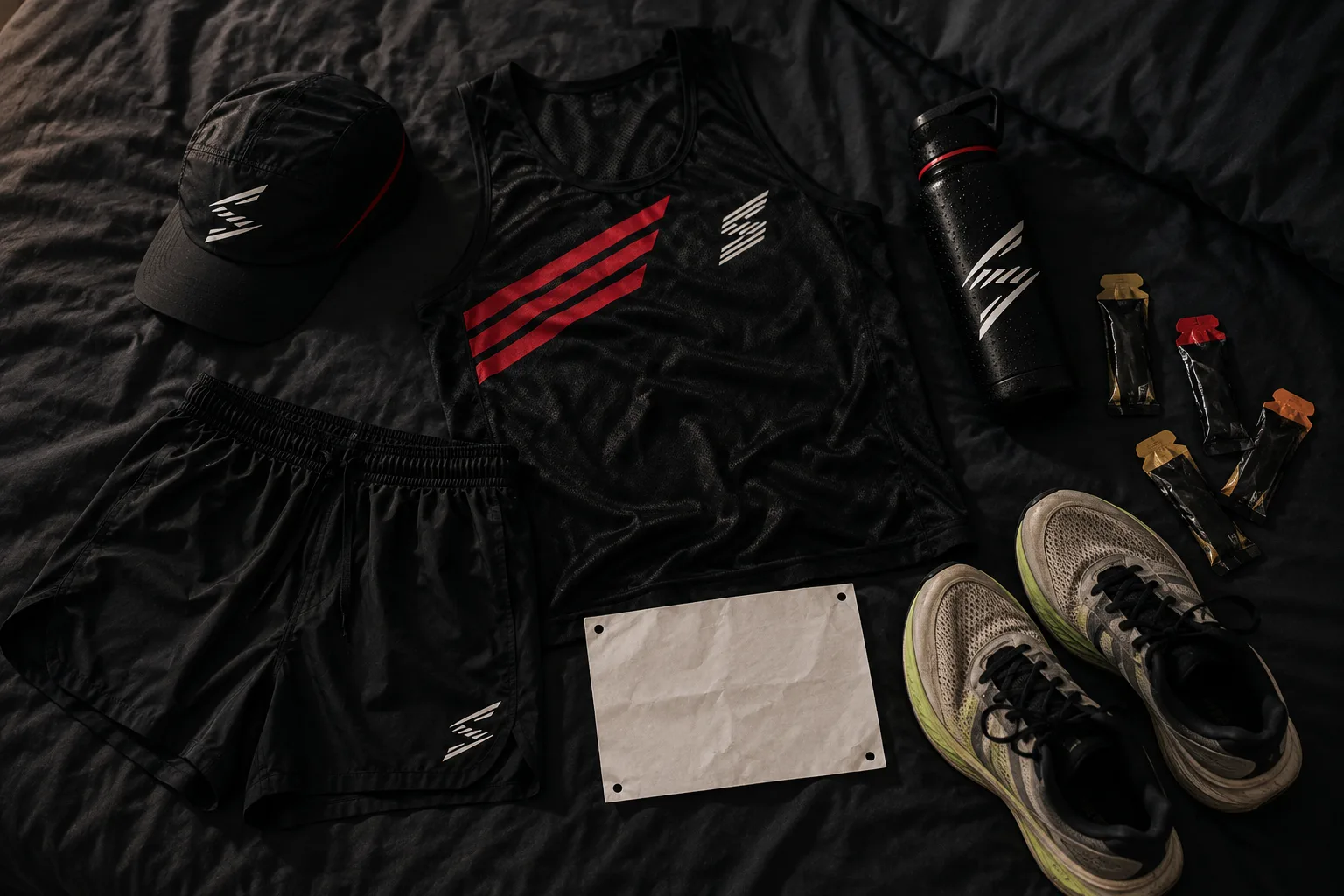
A written plan removes dozens of small decisions, and each decision is a chance to worry. Write down the morning in order:
- What time you wake, and what time you leave.
- What you eat for breakfast, and when.
- How you travel to the start, and where you will park or be dropped.
- What you are wearing, and what is in your bag.
- Where you are meeting friends or teammates.
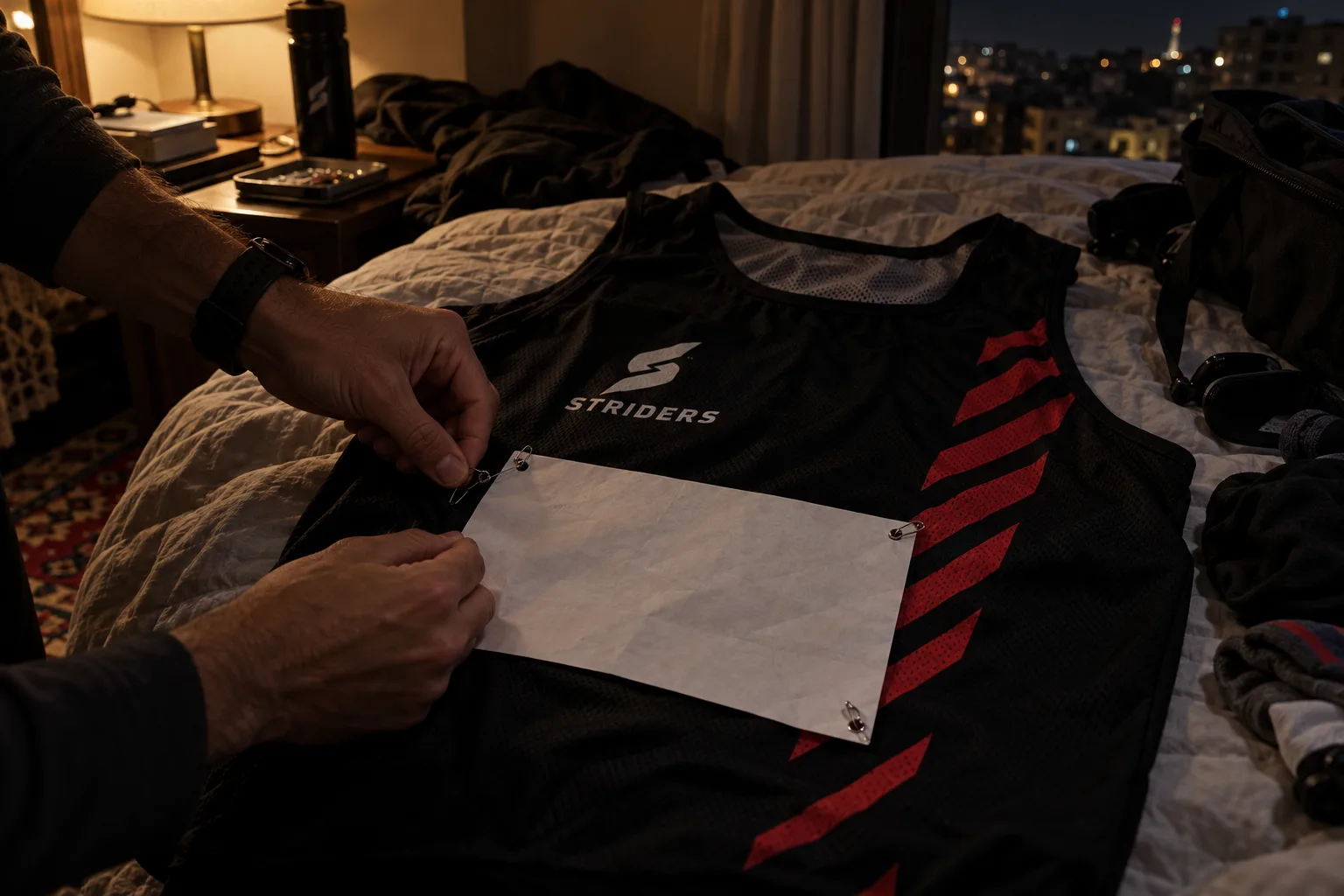
Our race-day checklist is a good template. Lay your kit out the night before and treat it as done.
What if I cannot sleep the night before?
You probably will not sleep perfectly, and that is fine. The nights earlier in the week matter more than the last one, so aim for good sleep in the days before and do not panic about the final night. Our rest and sleep guide explains why.
Lie down, rest, and let your body recover even if your mind is busy. A calm routine in the evening helps: a light meal, kit ready, phone away, alarms set. Then stop thinking about it.
How do I stop myself going out too fast?
The adrenaline of the start line feels like energy, and it will push you to run faster than your plan. Know that going in. Decide your first kilometres before the race and stick to them.
- Start a little slower than your target pace.
- Check your watch in the first minute, then focus on breathing and effort.
- Let people pass you. You will see many of them later.
Our guide to pacing a marathon lays out the plan in detail, and the taper guide will help you arrive with fresh legs.
How do I handle the mind games during the race?
Expect a rough patch. Almost everyone has one, and in a first marathon it tends to arrive somewhere between 28 and 35 km. When it does, you do not need to fix the whole race. You need to run the next small piece.
- Break the distance into chunks: the next km, the next aid station.
- Slow down briefly if you need to, drink or fuel, and relax your shoulders.
- Talk to yourself kindly. Something simple like “steady, I know how to do this” works.
- Use the crowd. Smile, make eye contact, and read the signs.
For the physical side of that late-race fade, read about hitting the wall.
Why does running with a group help?
Because you do not have to carry all of it on your own. A group takes pressure off in three ways:
- Shared pace. A running partner or pace group makes it easier to stay patient early and to keep going late.
- Shared nerves. Hearing others say they are nervous too makes your own feel normal.
- Shared routine. Meeting at a set time and place gives the morning structure and cuts down on decisions.
Running a few long runs with others before the race also means you will know what a steady effort feels like on tired legs, with friendly voices around you.
How does the club help with first-marathon nerves?
You do not have to train alone. The Saturday 6:30 am long run is 14 to 25 km on the Dabouq hills, with a group around you, and a good place to rehearse your breakfast, kit and pacing. The Wednesday 6:30 pm track session at Al Hussein Sports City is coached intervals in pace groups, and it builds the confidence of knowing your pace. And the Monday Open Run at 6:30 pm is easy and open to everyone: download the app and check in.
Amman’s hills and summer heat can add to the nerves, so rehearse them. Run some of your long runs on hilly routes and in similar weather, and read our summer heat guide. If you are choosing a plan, our marathon training page is a good place to start.
The bottom line
Nerves are normal, and they mean you care. Write down your race morning, rehearse your pacing and fuelling on long runs, expect a rough patch and plan for it. Run the first kilometres slowly, and surround yourself with people who make it feel easier.
If you want a group to run with, come to a session. Most of the nerves feel smaller with company.
General advice, not medical advice. If pain persists, see a doctor or physiotherapist.