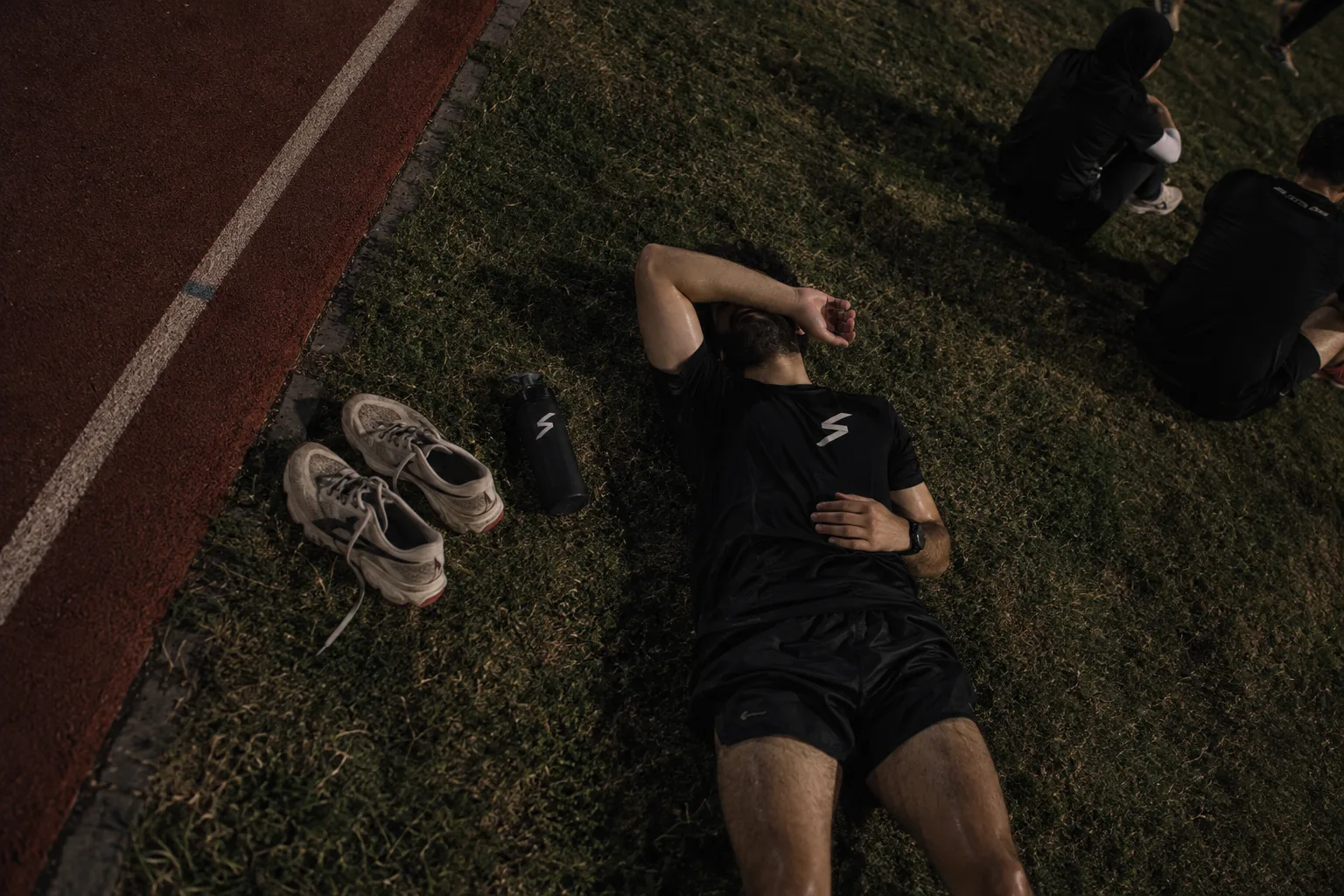
You have been training well for weeks. Then one morning the easy run feels like a race, your legs are heavy on the stairs, and you cannot remember the last time you looked forward to a session. Is this just a hard week, or is something wrong?
Most runners guess. Some push through because they think rest is weakness, and some panic and stop for a month. This article helps you work out which kind of tired you are, so you can respond with the right amount of rest.
Is being tired after training normal?
Yes. Training is meant to tire you a little. You run, your body is stressed, and during rest it rebuilds slightly stronger. Heavy legs the day after the Wednesday track session or a long Saturday run are part of the deal.
The key is that normal tiredness passes. After a night of good sleep and an easy day or two, you feel ready again. If that is your pattern, you are not overtrained. You are training.
What is overreaching?
Overreaching is what happens when you stack a bit too much hard work in a short time: a big week, a race, extra kilometres, less sleep. You feel flatter than usual and your runs get slower for the same effort.
It is common, and it is usually short. A lighter week, more sleep and mostly easy running bring you back, often feeling better than before. Some runners even plan a short block like this on purpose, followed by a recovery week. The danger is ignoring it and adding more.
What is overtraining, and how is it different?
Overtraining is when the tiredness stops responding to a few easy days. You have pushed past what your body can recover from for so long that it no longer bounces back quickly. It can take weeks or longer to feel normal again.
The signs tend to come together:
- Easy runs feel hard for a week or more, even after rest days.
- Your times drop even though you are training as much or more.
- Sleep gets worse, even though you are exhausted.
- You feel irritable, flat or low in a way that is not like you.
- You keep picking up small colds or niggles.
- Your heart rate behaves oddly at the same easy effort, if you track it.
One bad day is not overtraining. A pattern over a week or two is worth taking seriously.
And burnout?
Burnout is more about the head than the legs. You may not even be very tired physically, but the wish to run is gone. Sessions feel like chores, you find reasons to skip, and the thought of training makes you sigh.
It often follows months of pressure: chasing a time, never taking a break, or tying your mood to every run. More rest alone does not always fix it. What helps is changing something: dropping the watch for a while, running somewhere new, running with friends, or stepping back from a goal for a season.
What should I do if I think I have overdone it?
Start by easing off, early rather than late.
- Take two or three days with no running, or only short walks.
- Return with a week of short, genuinely easy runs. No intervals, no long run.
- Protect your sleep and eat properly; our rest and sleep guide covers the basics.
- Only bring back harder sessions once easy runs feel easy again.
If you feel better within a week or so, it was probably overreaching. If not, rest longer and look harder at what is going on in the rest of your life, because work stress, exams and poor sleep count too. Our note on building slowly shows how to add training back without repeating the mistake.
When should I see a doctor?
If the tiredness lasts more than a couple of weeks despite rest, or comes with things like dizziness, chest pain, unusual breathlessness, big changes in weight or appetite, or mood that worries you, see a doctor. Tiredness has many causes that have nothing to do with running, and some are easy to check. Do not rely on an article for that.
How does the club help?
A group makes it easier to run easy. On a Monday Open Run at 6:30 pm on the Al Hussein Sports City track, nobody is chasing a time. It is open to everyone; download the app and check in. It is a good place to come back after a rough patch.
On the Wednesday track session, the coach in your ear through the app sets the effort, so you are less tempted to turn every rep into a race. And if you are worn out, tell the coach. Running the Saturday long run shorter, or skipping a week, is part of training, not a failure.
Amman makes it harder in summer: heat adds stress to every run. See summer heat and expect to feel more tired then.
What mistakes should I avoid?
- Treating every flat day as a sign to train harder.
- Taking one rest day, feeling a bit better, and jumping straight back into a full week.
- Ignoring the rest of your life. Sleep, stress and food are part of your training load.
- Running every session hard. Most runs should be easy; see start easy.
- Waiting for a breakdown before taking a break.
The bottom line
Normal tiredness fades with a few easy days. Overreaching takes a lighter week. Overtraining lasts longer and needs real rest, and burnout needs a change, not just time off. Listen early, ease off before it gets worse, and see a doctor if it does not lift.
If you are coming back from a flat patch, the gentlest next step is a Monday Open Run, run slowly with the group.
General advice, not medical advice. If pain persists, see a doctor or physiotherapist.