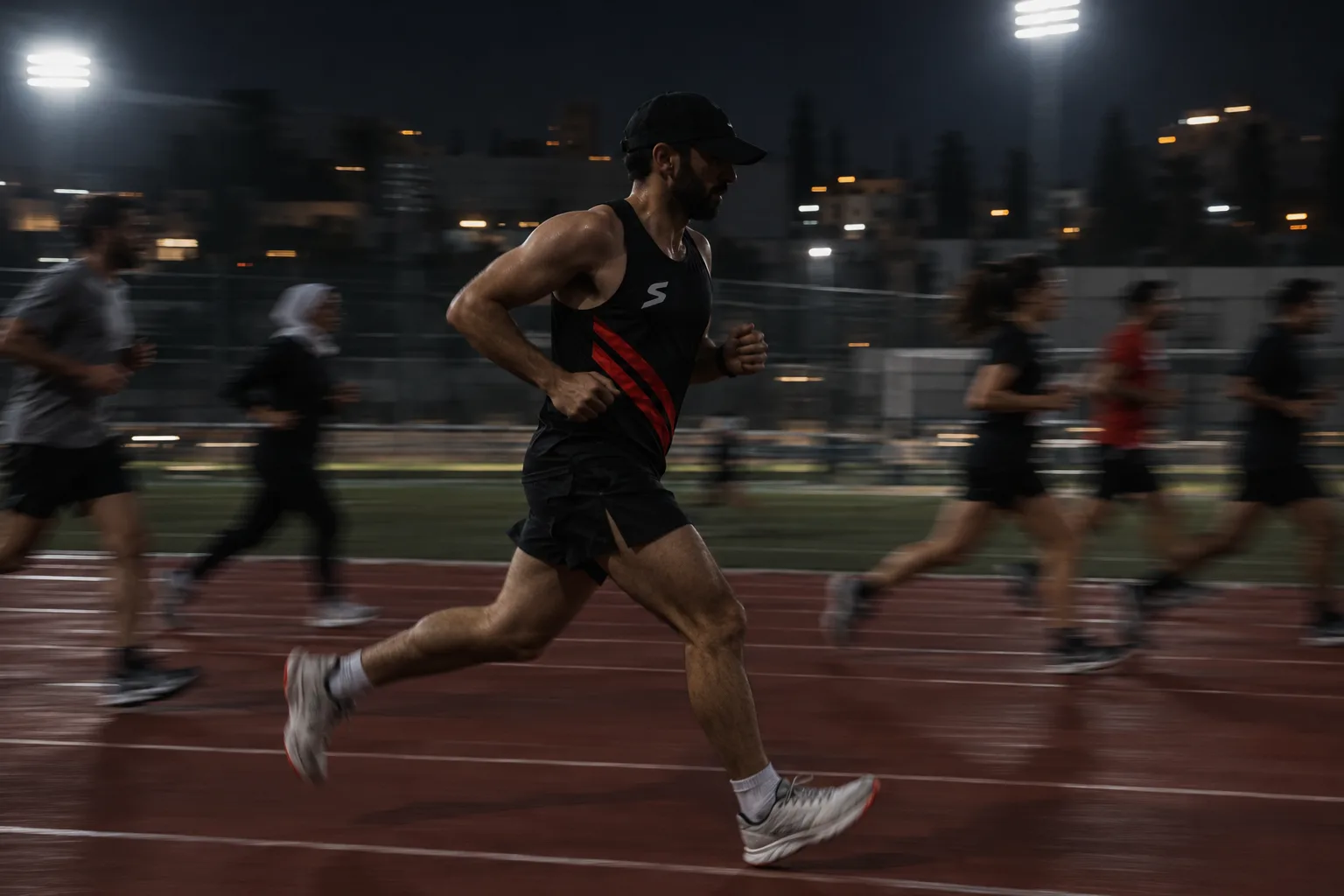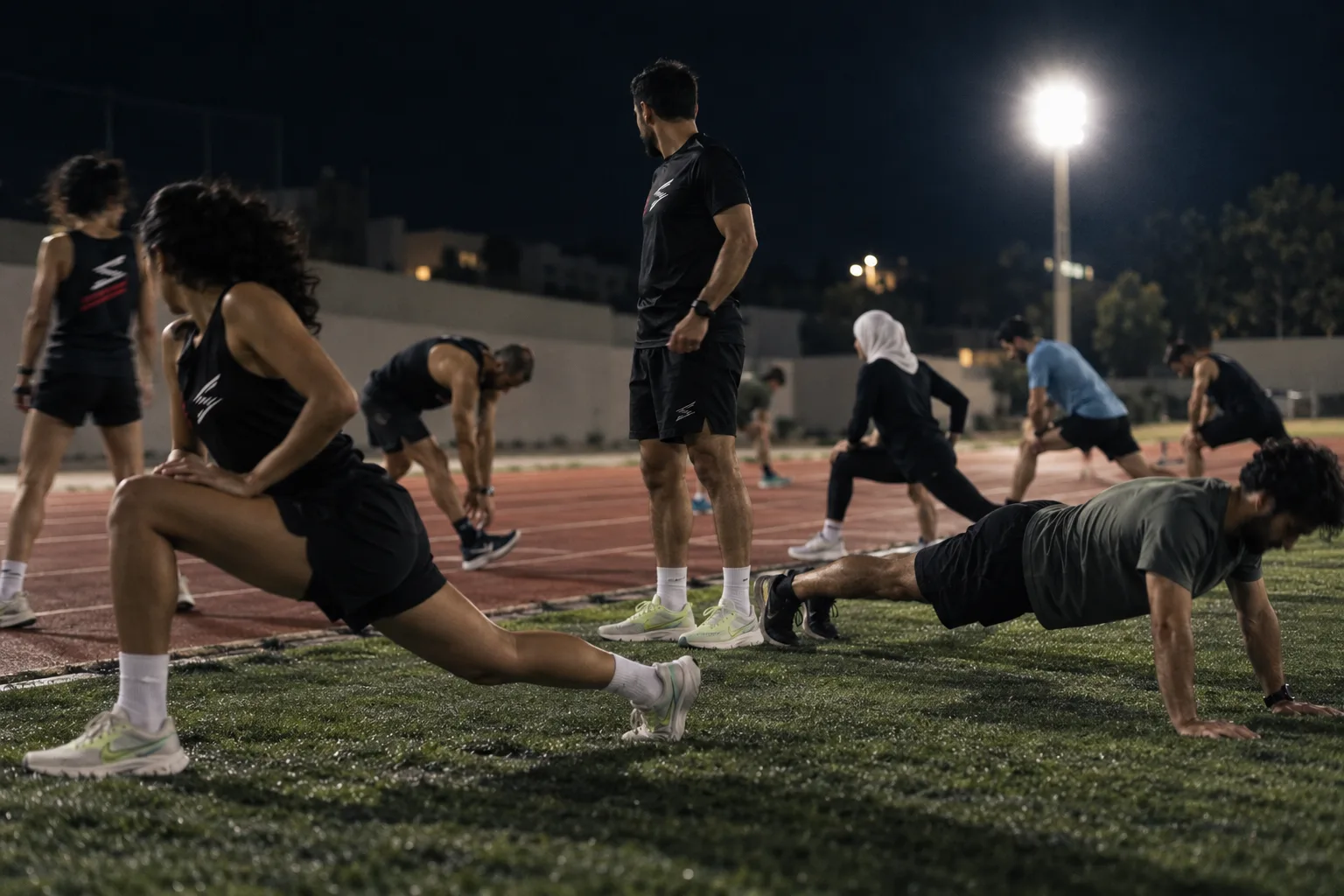
Most runners would rather run than lift. That is understandable, but a little strength work is one of the best things you can add. It helps you hold your form when you are tired, makes hills feel less punishing, and many runners find it helps them stay healthier over the long run.
You do not need a gym or a long routine. You need the minimum that works, done regularly. This article gives you a simple twenty-minute plan, and it is general guidance, not a medical prescription.
Why should runners lift at all?
Running is a series of single-leg hops. Each step lands on one leg with a force several times your body weight. If your hips, calves and core are weak, form drifts late in a run, and that is often when niggles start.
Strength work will not turn you into a bodybuilder, and it will not slow you down. Done sensibly, it supports the muscles and tendons that carry you, so you can run more with less drama. It is a helper for your running, not a competitor to it.
How much do I really need?
Less than you think. Two sessions a week of around 20 minutes is a solid minimum for most runners. If you can only manage one, one is still far better than none. Consistency beats intensity every time.
Start with your own body weight. Once those moves feel easy, add a backpack with a few books, a light dumbbell or a kettlebell, if you have one. There is no need to chase heavy weights.
What is the 20-minute routine?
Do each move for the number shown, rest briefly, and go round twice. Keep every rep slow and controlled.
- Squats or sit-to-stands: 10 reps. Push your hips back and keep your chest up.
- Reverse lunges: 8 per leg. Step back, lower gently, and stand up through the front heel.
- Single-leg glute bridge: 8 per leg. Lie on your back, one foot planted, lift your hips.
- Calf raises: 12 reps, standing on both feet, later on one. Go slow on the way down.
- Side plank: 20 seconds each side. Keep your body in one straight line.
- Plank or dead bug: 20 to 30 seconds. Breathe, and do not let your back sag.
That is it. Add a short warm-up first with some leg swings and a few bodyweight squats. Our warm-up guide has ideas.
Which moves matter most, and why?
If you only remember a few things, remember single-leg work and the calves. Running is one leg at a time, so lunges and single-leg bridges train exactly the job your body does on every step. Calf raises protect the lower leg, which takes a lot of repeated load on hills. The core work is there to keep your trunk steady, so your legs have a stable base to push from.
You can swap moves for similar ones if something bothers you. Step-ups on a low bench instead of lunges, or a double-leg bridge instead of a single-leg one, are perfectly good. The point is the pattern, not the exact exercise. Do the version you can do well, with control, and progress when it feels easy.
When in the week should I do it?
Put it where it does the least harm. A good slot is straight after an easy run, or on a day you are not running at all. Avoid doing a hard strength session the day before a long run or intervals, because sore legs make for a poor workout.
A simple pattern: strength after Monday’s easy run and again on a rest day later in the week. Our guide to rest and sleep explains why recovery days matter, and building slowly covers how to add anything new without overdoing it.
What if something hurts or feels too hard?
Mild muscle soreness for a day or two is normal when you are new to strength work. Sharp pain, joint pain or anything that gets worse as you go is not. Stop, back off, and swap the move for an easier version.
If something does not settle, or you have an old injury, see a doctor or physio before pushing on. They can show you how to adapt moves safely. Our note on common running injuries lists what to watch for.
How does this help on Amman’s hills?
Amman is hilly, and hills ask a lot from your glutes, calves and quads. Strength work makes climbing feel more manageable and descending less damaging. If you are already running the Saturday long run on the Dabouq hills, from 14 to 25 km at 6:30 am, you will notice how much the legs do. The same goes for hills in general.
The Wednesday track session at 6:30 pm is where you do the fast, structured work. Strength is the quiet partner behind it. Keep the strength sessions short, and let the track, the long run and the Monday Open Run stay the main events.
The bottom line
Twice a week, twenty minutes, six simple moves. Start with body weight, go slow, and place it after easy runs or on rest days. Stop if something hurts sharply, and talk to a doctor or physio if it does not settle.
You will not feel a difference in a week. Give it a month or two and see how your legs feel in the final hour of a long run. That is where strength shows up.
General advice, not medical advice. If pain persists, see a doctor or physiotherapist.