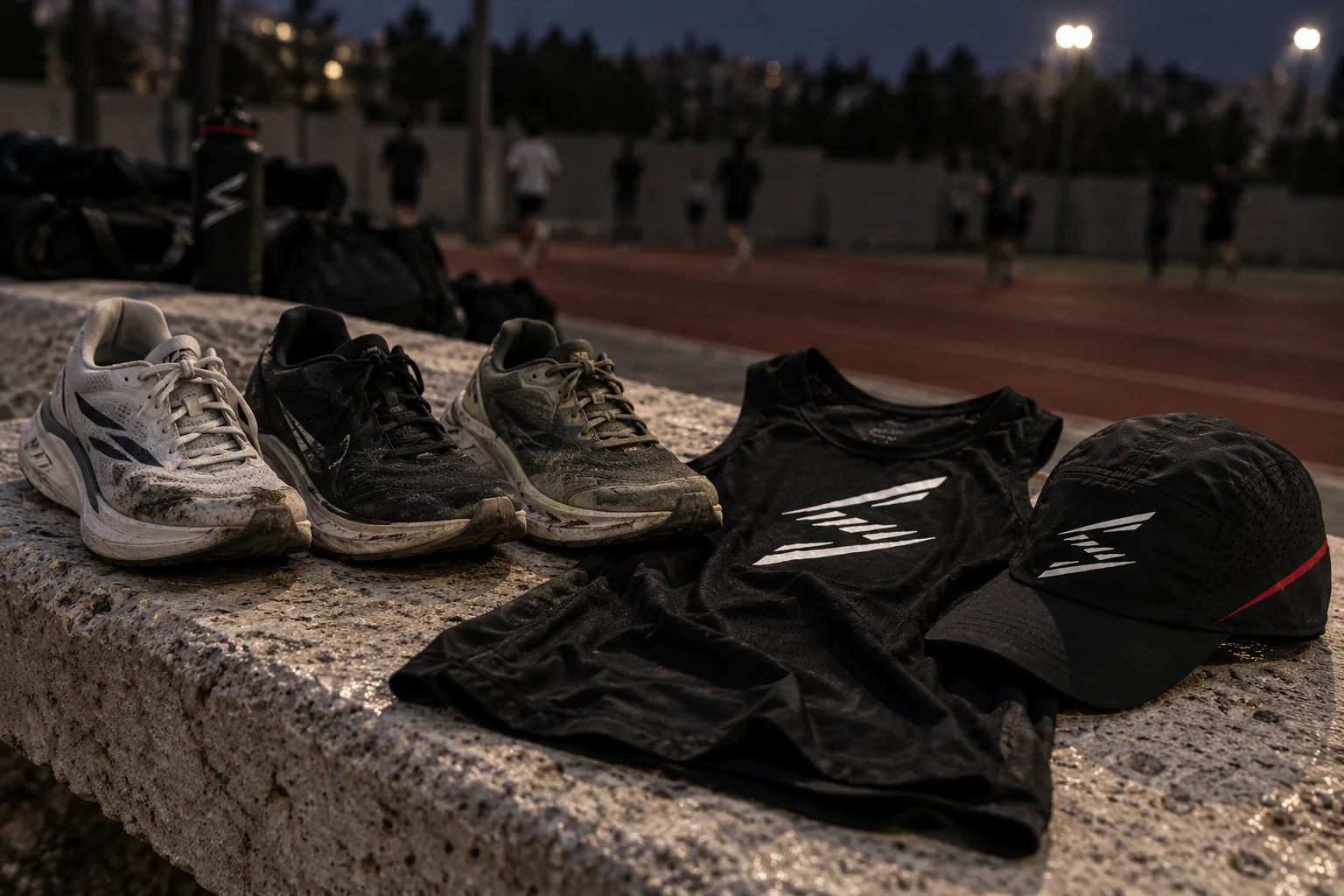
You don’t need much to start running, and you don’t need the most expensive version of anything.
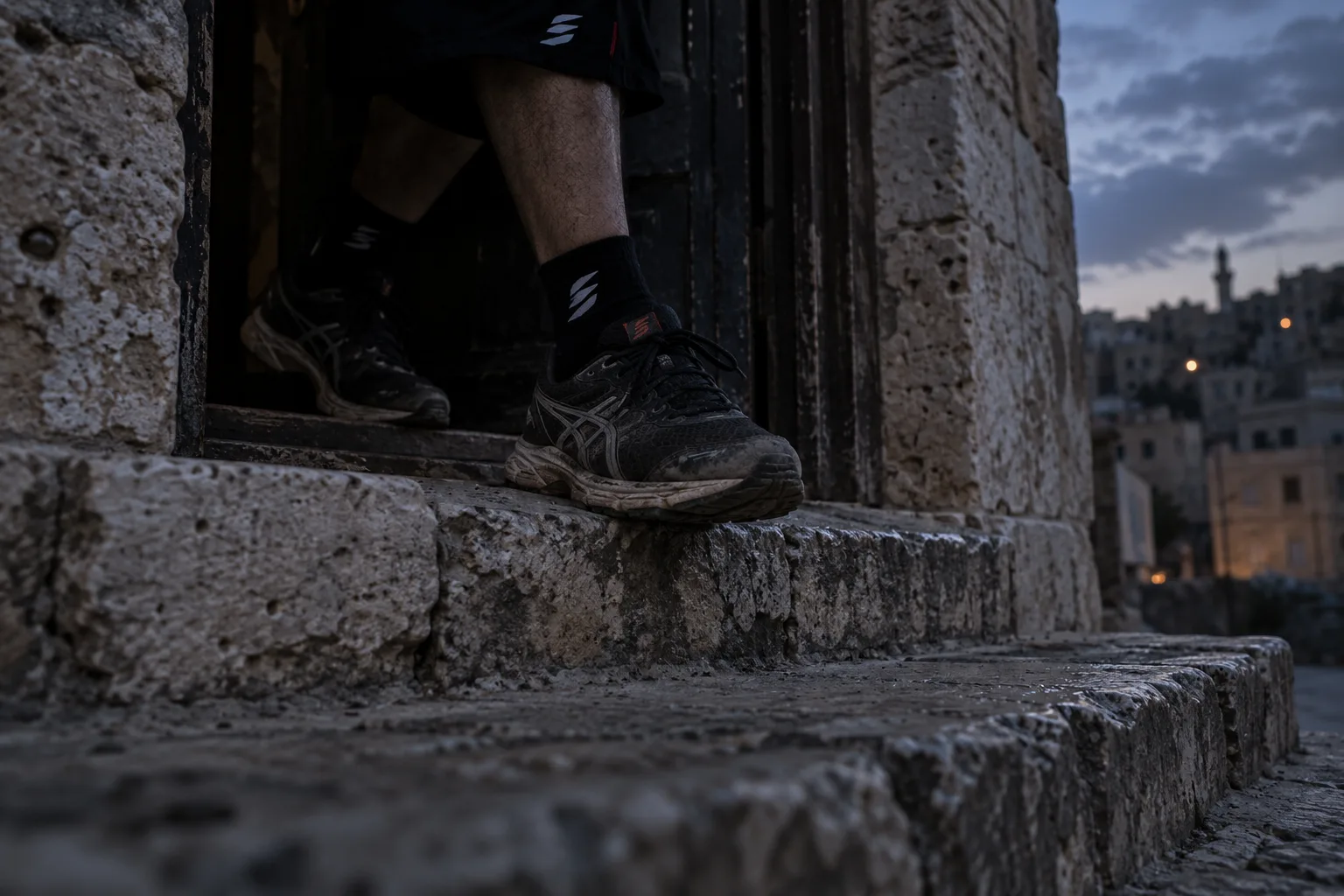
Shoes come first. Get running shoes that fit well and feel comfortable from the first try. There should be a little room at the toes, and your heel shouldn’t slip. If you can, buy from a running shop where you can try a few pairs and jog in them. Comfort is a better guide than the price or the brand.
Replace them when they’re worn out. When the cushioning feels flat or the soles are worn down, it’s time for a new pair. Many runners rotate two pairs.
Socks matter more than people think. Running socks that don’t bunch up help avoid blisters. Avoid thick cotton socks on long runs.
Clothes that don’t rub. Light, breathable fabric that fits close without chafing. On long runs, chafing is a real problem, so test your kit on shorter runs first.
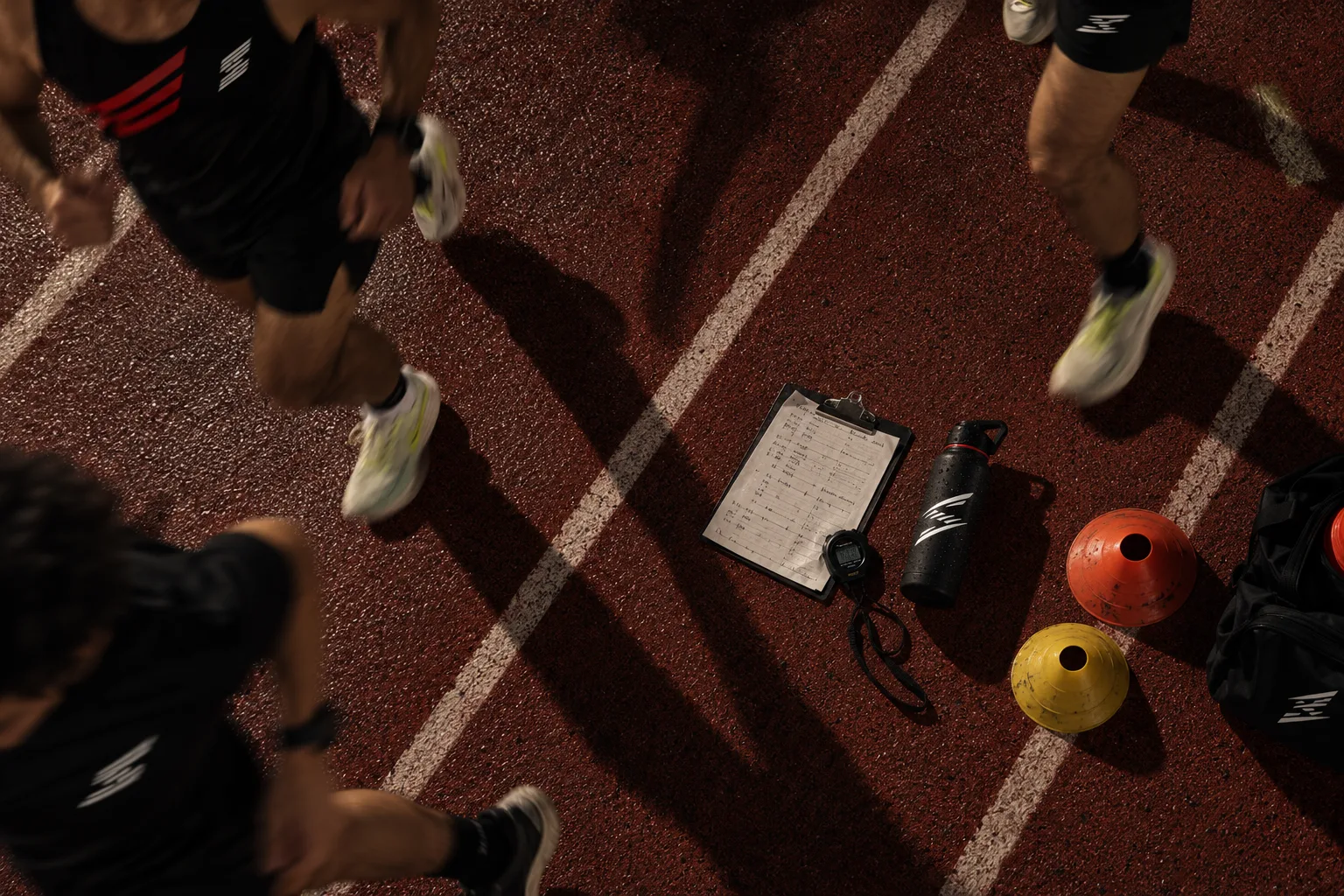
Water and visibility. A bottle or vest for longer runs, and something bright or reflective for evenings.
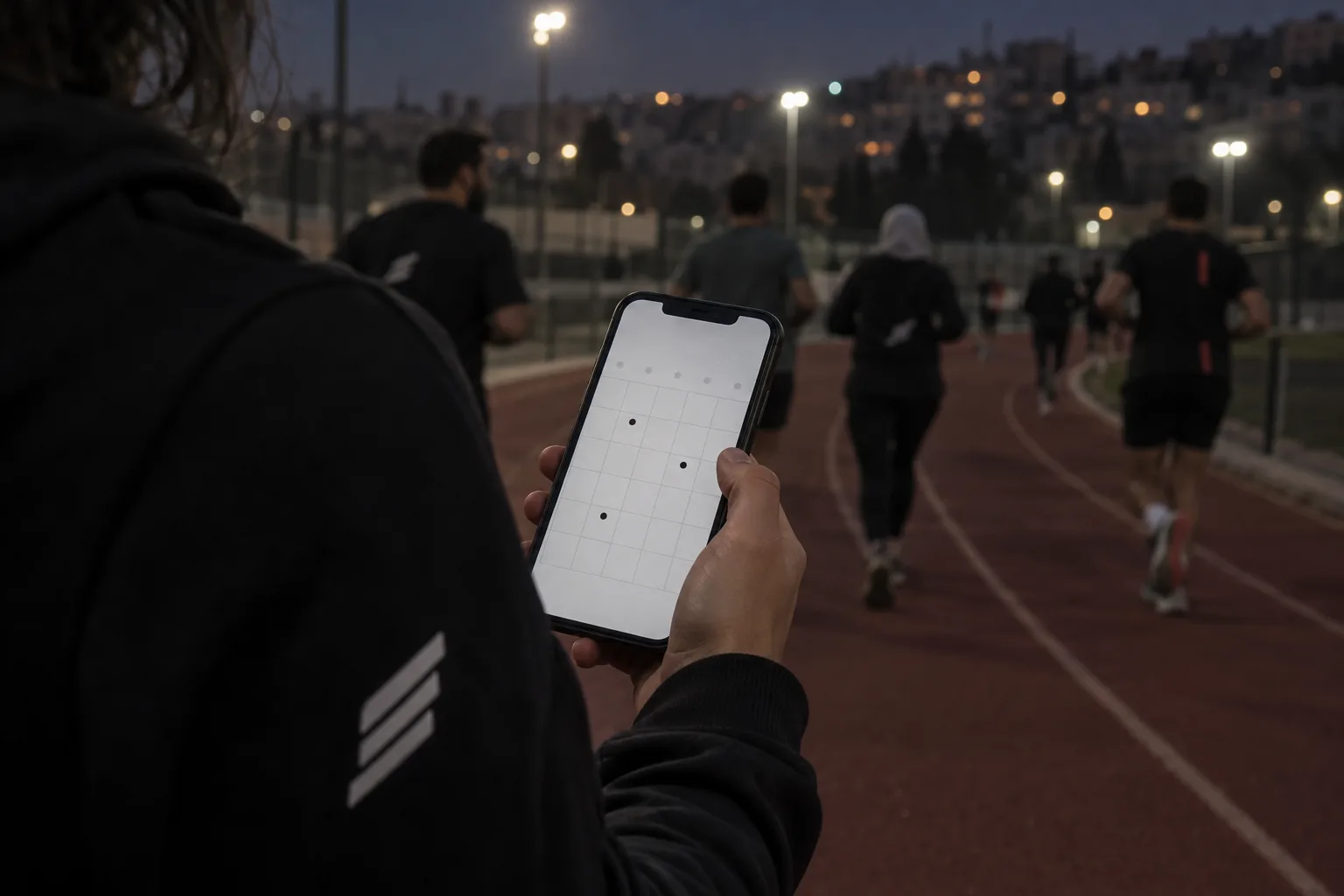
A watch is nice, not necessary. A phone or a simple watch to track time is enough at the start. The Striders app tells you the session plan.
Nothing new on race day. Test shoes, kit and snacks on training runs first.
General advice, not medical advice. If pain persists, see a doctor or physiotherapist.