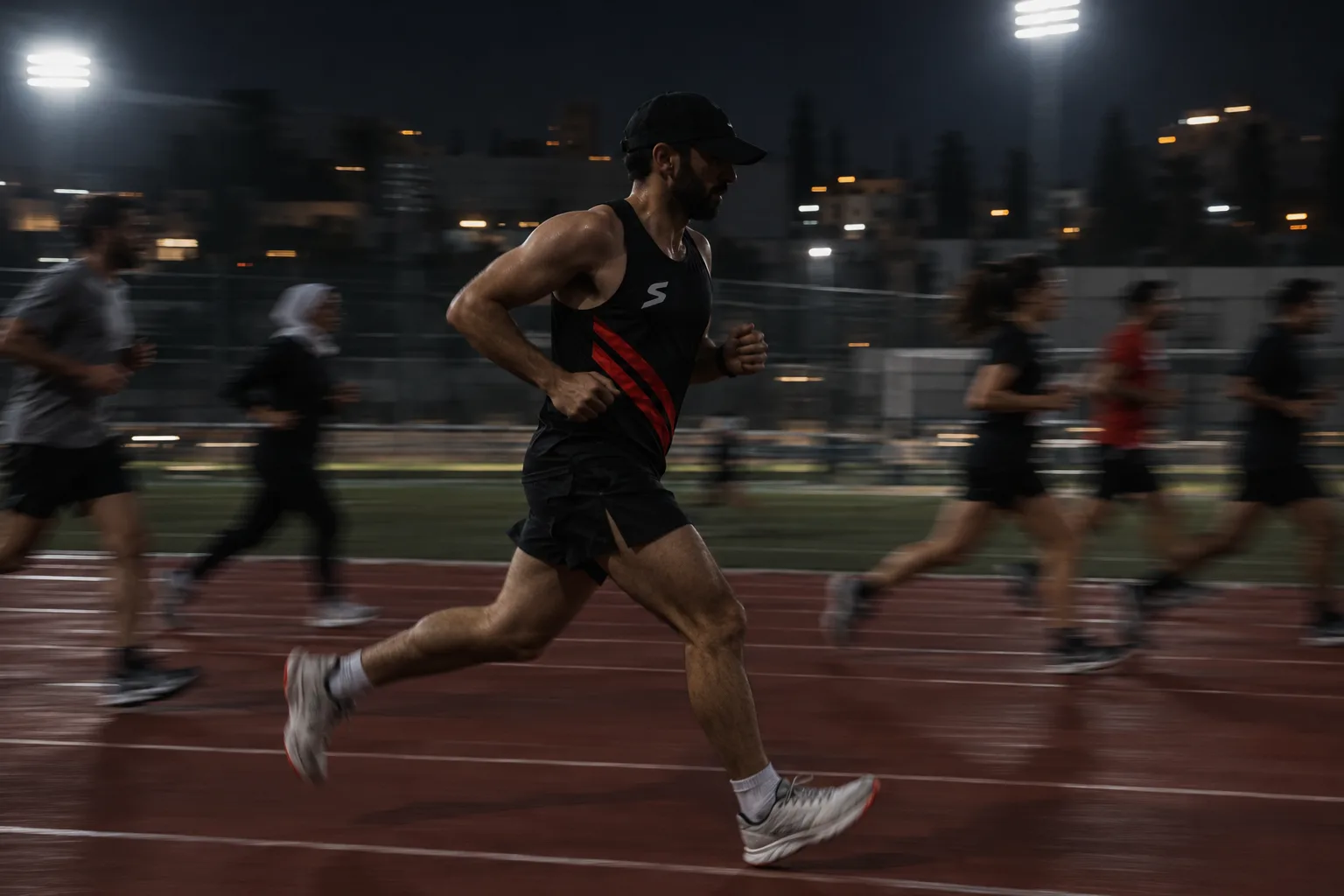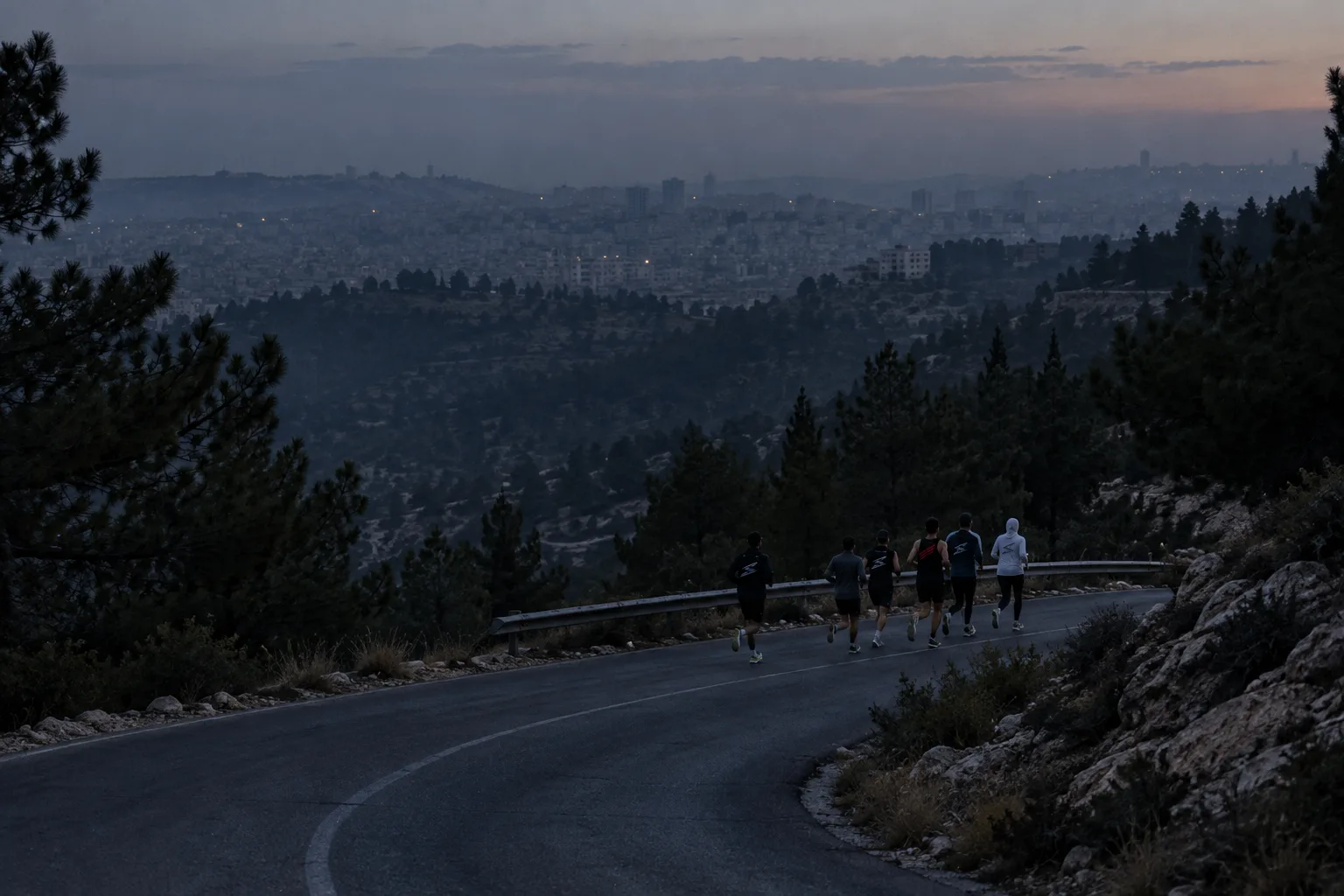
Plenty of people in Amman run all year and then wonder what to do when Ramadan arrives. The honest answer is that your running changes shape for a month, and that is fine. Fasting is the main event; the run has to fit around it, not the other way round.
This is not a plan for getting faster. It is a way to keep the habit alive, keep your legs used to moving, and arrive at the end of the month feeling like a runner who never stopped. Everything here is general advice from runners to runners, and your own body is the final word.
What is realistic to expect this month?
Be straight with yourself. You are eating and drinking in a much smaller window, your sleep is probably shorter and later, and your energy will rise and fall through the day. Hard sessions and big weeks are the wrong goal.
A good target for the month looks like this:
- Fewer runs than usual, perhaps two or three a week.
- Shorter runs, and all of them easy.
- No chasing times, and no worrying if your pace is slower than in September.
Think of it as maintenance. A month of gentle, regular running is easy to build on afterwards, and it asks very little of you. If you want the full case for keeping things relaxed, read why most of your running should feel easy.
When in the day can you run?
There is no single right answer. It depends on your work, your family and how you feel when fasting. Here are the common options, with the trade-offs.
Just before iftar. Short and very easy, so you can eat and drink soon after. The upside is that you break your fast right when you finish. The downside is that it is the hardest time to run if you are thirsty or low on energy, so keep it gentle and brief, or choose another slot.
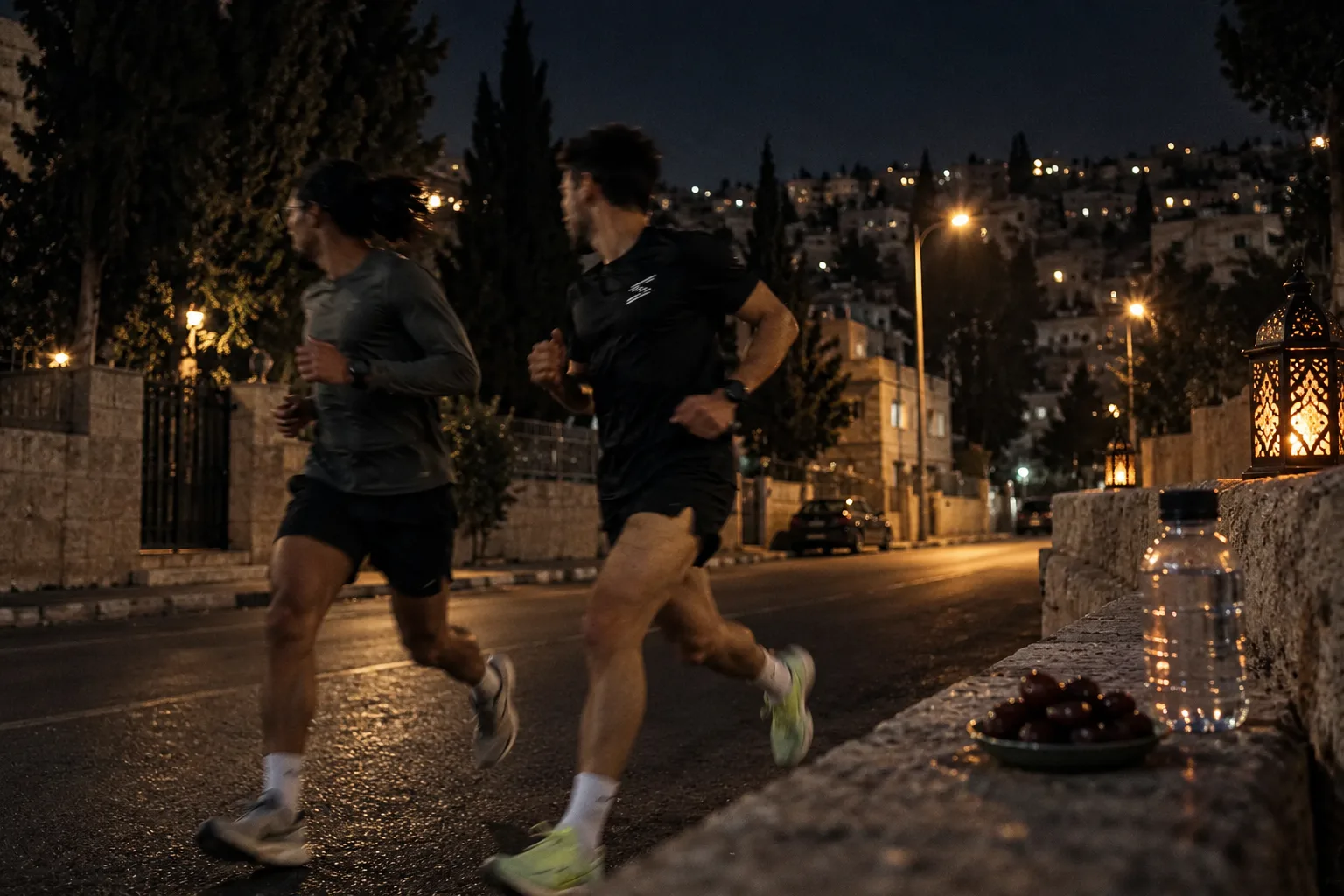
After iftar. Many people prefer this. Give your food time to settle first, an hour or more is common, then head out later in the evening when it is cooler. Start slower than you think you need to, because a full stomach and a fast pace do not mix.
Before suhoor. Some people run early, then eat and drink at suhoor. It works for a few, but it costs sleep, and sleep is precious this month. Try it once before you rely on it.
Whichever you choose, try it a couple of times and keep what feels good. If you are not fasting, you can still move your runs to match the group, and nobody will mind either way.
How should you drink through the evening?
The window between iftar and suhoor is where you do your hydrating. Rather than drinking a lot at once, sip steadily across the evening. Gulping a big amount in one go tends to leave you feeling heavy and sloshing, and it is hard to run on.
A few simple habits help:
- Keep a bottle nearby after iftar and drink a little at a time.
- Have water again at suhoor, not just tea or coffee.
- If you run in the evening, take a few sips before you go and a few after.
We are not going to give you a number of litres. It varies from person to person, and the weather matters too. For more on keeping cool and drinking sensibly when it is warm, see running in summer heat.
What should you eat?
Keep it simple. You do not need a special diet, just food you know and enjoy.
- At iftar, start with something light, such as dates and water, then eat your meal at an unhurried pace.
- If you plan to run after iftar, a smaller first meal and a bigger one later usually feels better than a huge plate beforehand.
- At suhoor, choose things that sit comfortably and that you already tolerate well.
The best rule is to avoid trying anything new on a run day. Whatever you eat, give it time before you head out.
What about strength work?
Keep it short. Ten to twenty minutes of simple exercises, such as squats, lunges, calf raises and a plank, is plenty. It helps you stay strong while your running is lighter, and it is easy to fit in at home. If you feel low on energy, skip it without guilt.
When should you skip the run?
Often. This is the part that matters most. Skip the run, or turn it into a walk, if:
- You feel dizzy, faint, or have a pounding headache.
- You are unwell, or you are recovering from being unwell.
- You slept badly and feel wrecked.
- It simply does not feel right today.
There is no shame in this, and missing a run does not undo anything. Pushing through when your body is saying no is the quickest way to get hurt or burnt out. If something feels wrong, stop and take care of yourself. For more on spotting problems early, see common running injuries.
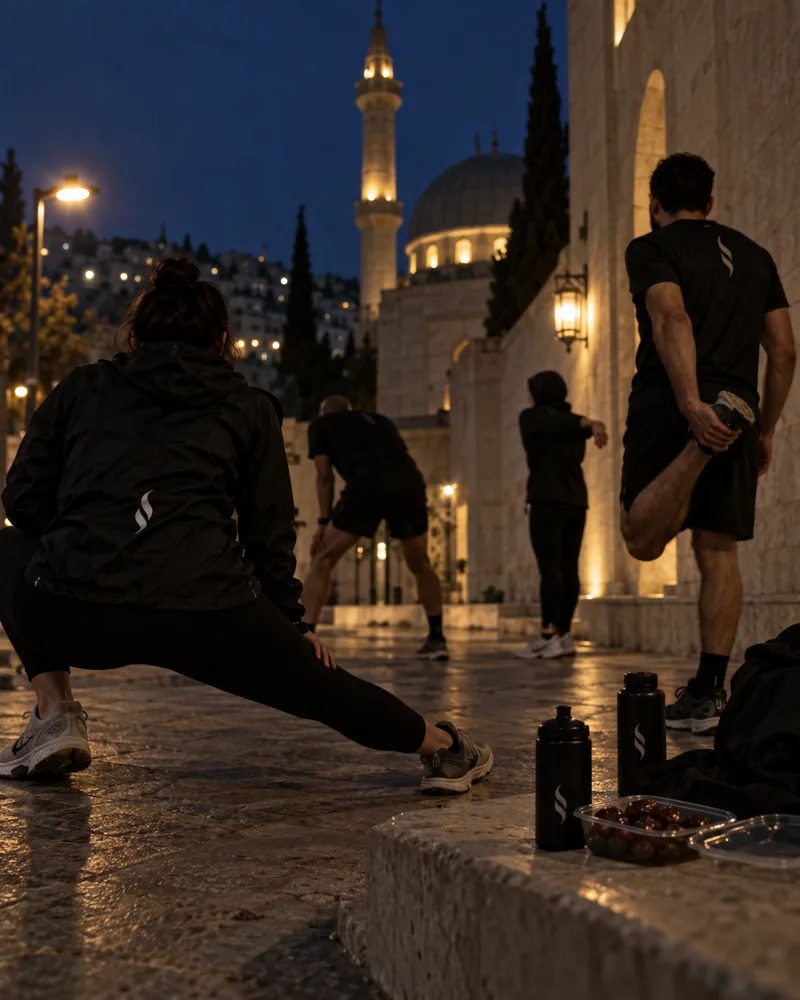
Why does sleep matter so much?
During Ramadan, sleep tends to be broken up by late meals, tarawih and early suhoor. That makes it the thing most likely to slip, and it affects how you feel on every run. Where you can, go to bed as early as the evening allows and take a short nap in the afternoon if your day lets you. Our guide to rest and sleep has more ideas. If a run costs you sleep, the sleep wins.
Can you still run with the club?
The club shares session times for the month in the app and on Instagram once they are set, so watch for those. Until then, the usual sessions are a good guide to what is on offer: the Monday Open Run is open to everyone, and you are welcome to join at your own pace and your own comfort. Whether you are fasting or not, the group adjusts, and no one is keeping score.
The bottom line
Ramadan is a month to protect your habit, not to build a new personal best. Run less, run easy, choose a time that works for your day and your body, and drink steadily through the evening. Eat simply, sleep when you can, and skip any run that does not feel right. Fasting comes first, and the running fits around it. See you back on the track when the month is done.
General advice, not medical advice. If pain persists, see a doctor or physiotherapist.